Introduction
In recent weeks, the airspace around Alaska has seen an uptick in activity from Russian fighter jets, raising alarms within the United States. Military officials have been closely monitoring these movements as they pose potential threats to national security and illustrate ongoing geopolitical tensions between the two countries.
Recent Incidents
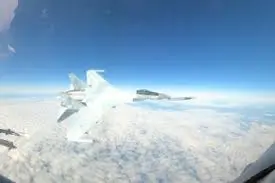
The North American Aerospace Defense Command (NORAD) has confirmed multiple encounters with Russian Su-35 fighter jets and Tu-95 bombers in the vicinity of Alaska. On several occasions, these aircraft have reportedly approached the Alaskan coastline, prompting U.S. Air Force fighters to scramble and intercept the intruders. According to NORAD, these encounters have occurred over the past month, with at least three noteworthy incidents reported.
The latest occurrence took place just last week when U.S. F-22 Raptors were dispatched to intercept Russian aircraft that were flying just outside the U.S. airspace boundaries. While no direct confrontations ensued, these actions underline a pattern of increasing provocations from Russia. The region’s strategic importance has made it a focal point for military operations, as it serves as a critical gateway between the Arctic and the North Pacific.
Geopolitical Implications
The increase in Russian fighter jet activity may be interpreted as an assertive stance by Moscow amid rising tensions with NATO and the West. Analysts suggest that these frequent flights are not merely routine but also serve as a demonstration of military capability and reach. In a statement, a defence analyst noted, “This is part of Russia’s broader strategy to project power and challenge U.S. influence in the Arctic region.”
Moreover, the Arctic has recently gained prominence in global strategic discussions, with nations vying for resources and shipping routes that are becoming more accessible due to climate change.
Conclusion
The continued presence of Russian fighter jets near Alaska signifies the ongoing complexities in international relations, particularly in the Arctic sphere. As military activities increase, both nations must navigate this delicate environment carefully, balancing national security interests with diplomatic efforts. The U.S. military has committed to maintaining a vigilant posture in response to these developments, and experts will be watching closely for any changes in Russian military strategies in the region. Looking ahead, the situation remains fluid, and stakeholders must prepare for potential shifts as geopolitical dynamics evolve.
