Introduction
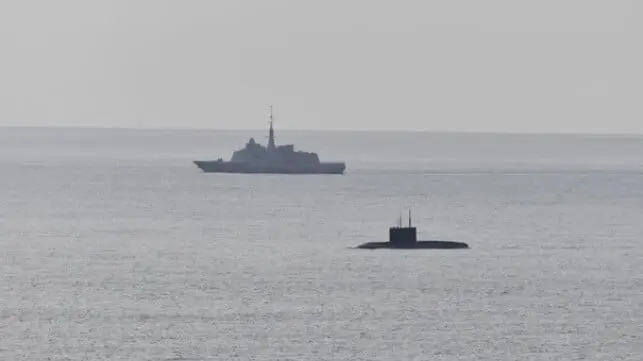
The presence of Russian submarines near France’s territorial waters has become a focal point of concern for European security agencies. As tensions between NATO countries and Russia continue to simmer, the implications of these underwater movements are significant, highlighting the critical need for vigilance in safeguarding sovereign maritime domains.
Recent Developments
In the past week, reports surfaced regarding multiple Russian submarines operating in proximity to French coastal waters. The French Navy confirmed that they had detected a heightened level of underwater activity, prompting an intercept mission involving naval aircraft and surface vessels. These operations are part of a broader strategy by NATO forces to monitor hostile underwater capabilities amid ongoing geopolitical tensions.
Experts assert that the increase in Russian submarine activity is not just an exercise in naval prowess but a possible show of strength against NATO’s presence in Eastern Europe. Western officials have commented on the strategic significance of the Mediterranean Sea, where Russia aims to assert its influence and gather intelligence on NATO operations.
Security Concerns
The implications of Russian submarines operating close to France are multifaceted. French Defence Minister Sébastien Lecornu stated that such maneuvers pose a direct challenge to European security, indicating an imperative for collaborative response strategies among European nations. The French military has also reiterated its commitment to maintaining a robust naval presence to ensure the safety of its maritime borders.
Additionally, the European Union and NATO have held discussions on enhancing collective maritime surveillance and intelligence-sharing protocols. Countries like the United Kingdom and Germany have pledged to support France by increasing their naval footprint in the region, ensuring that potential threats are adequately monitored.
Conclusion
The situation surrounding Russian submarines near France underscores the need for continuous vigilance in maritime security across Europe. As the geopolitical landscape evolves, so too must the strategies employed by NATO and European countries to counter these challenges. The recent activities serve as a reminder of the delicate balance of power in European waters and the ongoing risks posed by strategic military posturing. Looking ahead, analysts predict that cooperation among European nations will be crucial in addressing not only current tensions but also potential future escalations in submarine warfare capabilities.
