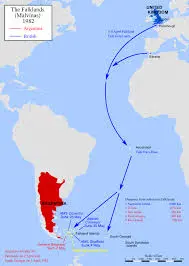
Introduction to the Falklands War
The Falklands War, fought between April and June 1982, remains a pivotal moment in British and Argentine history. Understanding this conflict is crucial as it not only defines the contemporary relations between the UK and Argentina but also has implications for international military strategy and territorial sovereignty.
The Background of the Conflict
The origins of the Falklands War can be traced back to long-standing territorial disputes over the Falkland Islands, known as Las Malvinas in Argentina. While the islands were maintained as a British Overseas Territory since 1833, the Argentine government has consistently pushed claims to sovereignty. The tension escalated in 1982 when the military junta in Argentina sought to divert attention from domestic issues by launching an invasion of the islands on April 2.
The Course of the War
The conflict lasted 74 days and involved extensive naval and air engagements, resulting in the loss of lives on both sides. British forces, with military support from the United States and logistical capabilities, regrouped and launched a counter-offensive to reclaim the islands. The decisive moments came with the sinking of the Argentine cruiser ARA General Belgrano and the successful British reoccupation of South Georgia and South Sandwich Islands, culminating in the surrender of Argentine forces on June 14. The war claimed the lives of 649 Argentine military personnel, 255 British service members, and three Falkland Islanders.
The Aftermath and Ongoing Significance
The aftermath of the war had profound implications. The victory strengthened British resolve and military reputation, whereas in Argentina, it marked the decline of the military junta and the eventual return to democratic governance. The war was also instrumental in shaping both nations’ identities; for Brits, it reinforced a spirit of national pride, while for Argentines, it deepened a sense of national loss and rekindled claims over the islands.
Current Implications
Today, the sovereignty dispute is still unresolved, with Argentina continuing to assert its claim over the islands diplomatically. Since the conflict, there have been proposals for joint administration and natural resource exploration rights over the surrounding waters that remain controversial. The military and historical narratives surrounding the Falklands War continue to influence public opinion and politics in both countries.
Conclusion
The Falklands War is more than just a historical event; it is a key chapter in the ongoing dialogue about colonial legacies and national identity. For readers engaging with this topic, understanding the complexities involved can foster a better appreciation of current geopolitical dynamics, and the profound effect that such a conflict has on national narratives well beyond its immediate military consequences.
