Introduction
RAF Fylingdales, a Royal Air Force radar station located in North Yorkshire, plays a pivotal role in the United Kingdom’s national security landscape. Established in the 1960s, its primary function is to provide early warning of ballistic missile attacks and support the UK’s commitment to NATO. As geopolitical tensions rise globally, the significance of RAF Fylingdales only intensifies, making it essential for the British military and its allies.
Operations and Capabilities
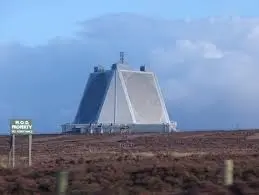
RAF Fylingdales houses an advanced early warning radar system known as the Solid State Phased Array Radar (SSPAR). This state-of-the-art technology enables the facility to track high-altitude objects in space, including missiles and debris. The radar system is capable of detecting incoming threats and transmitting vital information to military commands in real-time, thereby enhancing response strategies. In recent years, RAF Fylingdales has also taken on responsibilities related to space surveillance, tracking objects in low Earth orbit to ensure they do not pose threats to satellites or manned missions.
Collaboration with NATO
RAF Fylingdales is an integral part of NATO’s missile defence strategy. It operates within a unified network of radar stations and defence systems across Europe. As part of this collaboration, the facility contributes to the collective defence posture of the alliance, allowing NATO to respond more effectively to potential threats. Regular joint exercises are conducted to ensure seamless interoperability among member nations, with RAF Fylingdales at the forefront of these efforts.
Recent Developments
In recent months, the importance of RAF Fylingdales has been underscored by increasing tensions between NATO and countries such as Russia. The UK government has pledged to enhance funding for defence capabilities, including improvements to radar infrastructure and cybersecurity measures at Fylingdales. Additionally, the station has seen an influx of personnel and technological upgrades designed to keep pace with evolving threats in the global landscape.
Conclusion
RAF Fylingdales stands as a critical component of the United Kingdom’s defence strategy. With geopolitical uncertainties on the rise, the role of this radar station becomes all the more significant in ensuring the safety and security of the UK and its allies. As the military landscape continues to evolve, RAF Fylingdales will likely adapt to meet new challenges, remaining a fundamental asset in the broader framework of national and international security.
