Introduction
The Stockton and Darlington Railway (SDR), celebrated as the world’s first public railway to utilise steam locomotives, marks a significant milestone in the history of transportation. Established in 1825, it not only revolutionised goods transport but also set the stage for railway development worldwide. Understanding its historical importance is crucial for appreciating the evolution of modern rail travel and its socio-economic impacts.
Historical Background
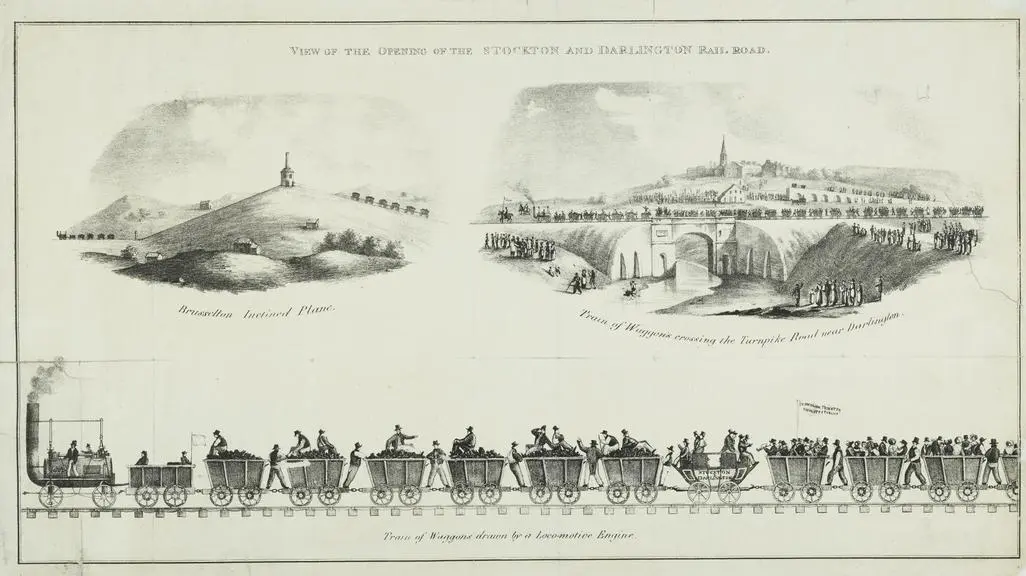
Initiated by local coal mine owner Edward Pease, the railway was developed to transport coal from the mines near Shildon in County Durham to the port of Stockton-on-Tees. The opening of the railway brought forth a transformation in logistics and trade, leading to economic growth and job creation in the region. On September 27, 1825, the 25-mile railway was officially opened, with the famous locomotive ‘Locomotion No. 1’ successfully pulling a train of coal wagons.
Significant Developments
Over the years, the SDR underwent various developments, expanding its reach and services. The railway network served not only to transport coal but also goods and passengers, showcasing the potential of railways as a primary mode of transport. By the mid-19th century, the SDR integrated with larger rail networks, playing a crucial role in the UK’s transport infrastructure.
In recent years, the significance of the Stockton and Darlington Railway has been recognised by various preservation and heritage initiatives. In 2008, the railway was formally designated as a UNESCO World Heritage Site, honouring its contribution to the rail industry’s historical evolution and the wider industrial revolution.
The Modern Era and Legacy
As we progress into the 21st century, the legacy of the Stockton and Darlington Railway remains significant. It continues to draw interest from historians, engineers, and tourists, with various heritage events and activities taking place annually. These events often feature steam train rides and exhibitions, giving insight into the railway’s historic operations.
Local initiatives also focus on education about the railway’s history, demonstrating its influence on today’s transport systems. The railway’s original route is preserved in parts and is a testament to the early innovations in railway technology.
Conclusion
The Stockton and Darlington Railway is more than just a historical site; it is a landmark of human ingenuity that reshaped society and industry. Understanding its significance helps highlight the evolution of transportation and its implications for modern infrastructure. Moving forward, efforts to preserve and celebrate the railway’s heritage may foster a greater appreciation for the innovations that paved the way for contemporary rail systems worldwide.
