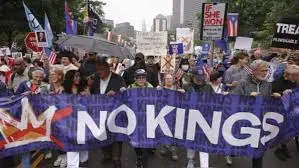
Introduction: The Rise of the No Kings Protest
The No Kings protest has recently emerged as a significant social movement across various nations in Europe, driven by a collective desire for democratic reforms and a shift away from royalist structures. The movement is particularly relevant in the current socio-political climate, where debates on democratic representation and equality are at the forefront of public discourse. Activists are rallying against what they perceive as outdated monarchical systems that do not align with contemporary democratic values.
Key Events and Developments
In recent weeks, major cities such as London, Madrid, and Berlin have seen large gatherings of demonstrators participating in the No Kings protest. The movement gained traction particularly following the coronation of King Charles III, which some activists viewed as a stark reminder of institutional inequality and privilege associated with monarchy. Social media platforms have played a crucial role in organising these protests, allowing individuals to share their motivations and unite under common goals.
A notable event occurred in London, where thousands marched from Trafalgar Square to Buckingham Palace, voicing their discontent with the monarchy and advocating for a republic. Speakers at the rally emphasised the need for a government that reflects the will of the people rather than inherited privilege. The movement is galvanising support from a diverse demographic, appealing to young people and those advocating for social justice.
The Broader Context and Impact
The No Kings protest is not only a response to specific events but also indicative of a broader shift in public sentiment towards monarchy itself. Polls have shown a growing number of citizens in several countries questioning the relevance and necessity of monarchy in modern governance. With these protests, advocates are calling for constitutional changes that would ensure elected officials replace hereditary positions, signifying a radical shift in governance.
Conclusion: The Future of the No Kings Movement
As the No Kings protest gains momentum, it raises pertinent questions about the future of monarchy in society. With increasing support, the movement may influence policy changes and encourage greater civic engagement, particularly among younger generations. The ongoing discussions about the role of monarchies highlight the struggle for democratic reform and equality, making the No Kings protest a significant topic worthy of attention in the coming months. Observers will be keen to see whether the movement will translate into substantial political change or if it will fizzle out in the face of entrenched royal traditions.
