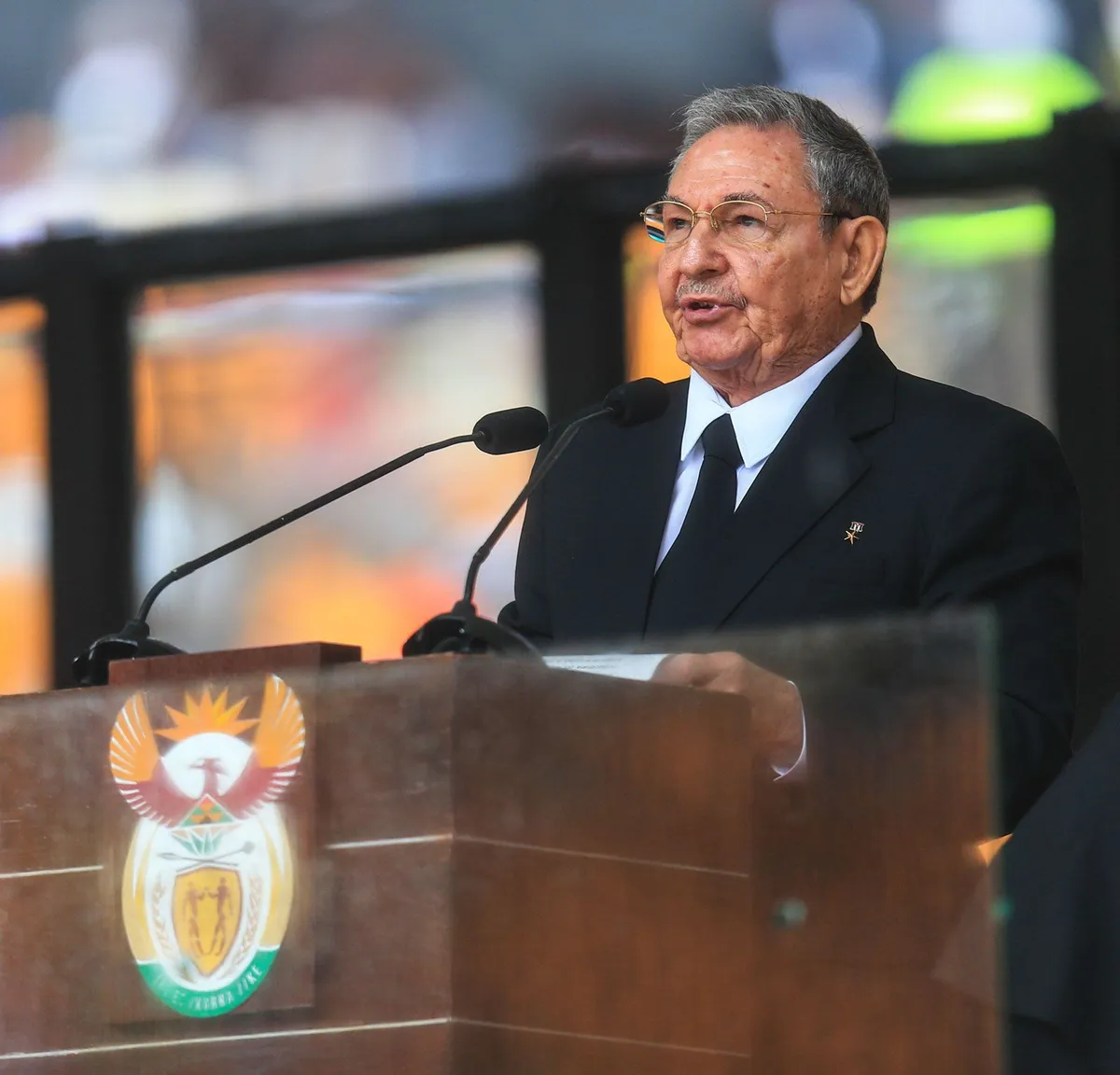
Raúl Castro, who succeeded his brother Fidel as president of Cuba, is currently involved in talks between Cuba and the United States. These discussions are particularly significant as they occur amid rising tensions due to an ongoing oil blockade that has left the island nation without fuel shipments for three months.
Cuban President Miguel Díaz-Canel has indicated that the talks are in their early stages. He emphasized the necessity of building a channel for dialogue before any formal agreement can be reached. “First, we must build a channel for dialogue. Then, we must build common agendas of interests for the parties, and the parties must demonstrate their intention to move forward and truly commit to the program based on the discussion of those agendas,” Díaz-Canel stated.
Despite Díaz-Canel’s presidency since 2018, Raúl Castro remains a powerful figure in Cuba, guiding the dialogue process alongside other branches of the Communist Party and government. His involvement is reminiscent of the historic talks he led with former U.S. President Barack Obama in 2014, which successfully restored diplomatic relations between the two nations.
The current situation in Cuba is dire, with prolonged power outages resulting from a deteriorating power grid. Francisco Pichón has warned that if the energy crisis continues, it could lead to a humanitarian crisis, stating, “If the current situation continues and the country’s fuel reserves are depleted, we fear an accelerated deterioration with the possible loss of lives.”
UN officials have estimated that addressing the energy crisis will require $94 million. The health situation is also alarming, with 96,000 people potentially facing interruptions in surgeries due to energy issues, and 30,000 minors at risk of falling behind on vaccination schedules.
As the U.S. threatens tariffs on any country supplying oil to Cuba, the path to a resolution appears complex. Díaz-Canel has acknowledged that the process of reaching an agreement will be lengthy, indicating that both sides will need to navigate significant challenges ahead.
Observers are closely watching these developments, as the outcome of the talks could have far-reaching implications for both nations. The international community remains hopeful that dialogue will lead to a resolution that alleviates the humanitarian crisis in Cuba.
