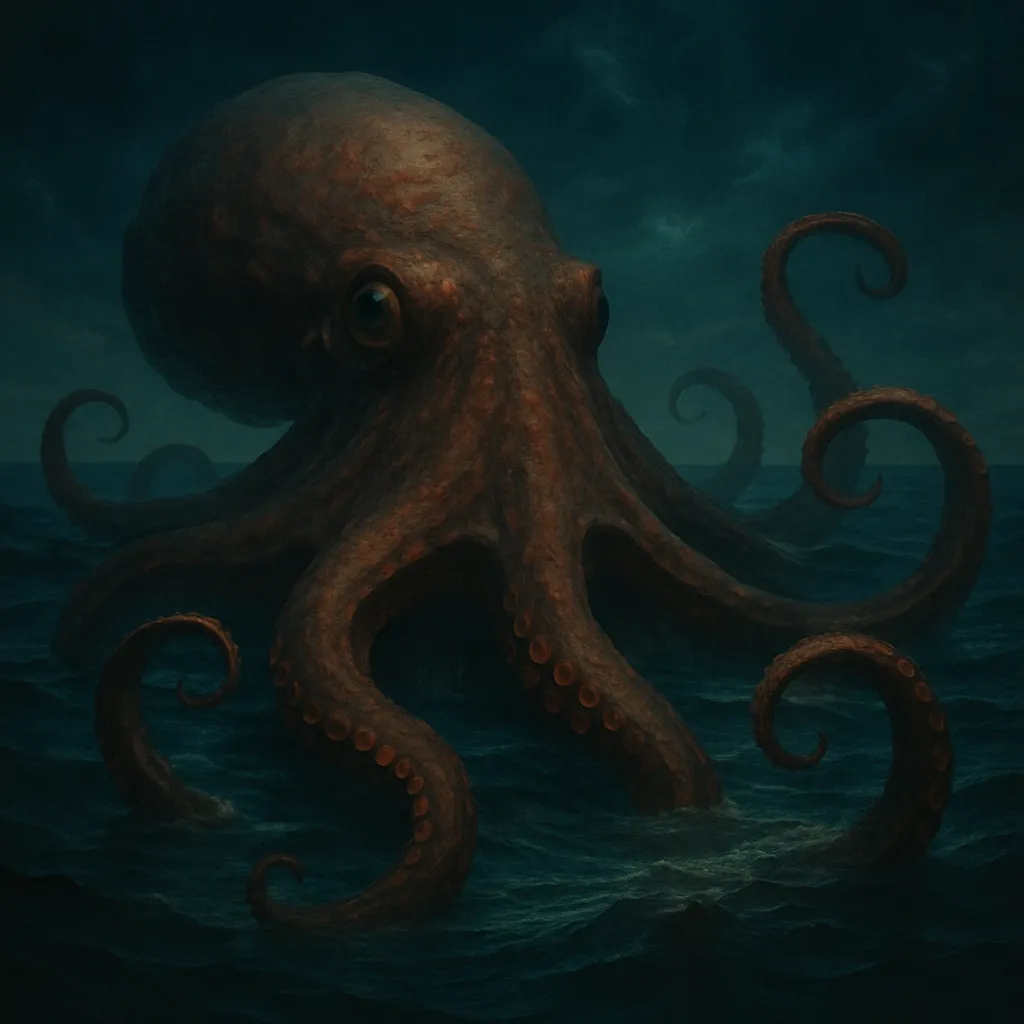
“Our study shows that giant invertebrates — octopuses — were also part of the top predator community,” says Yasuhiro Iba, a leading researcher on these ancient creatures. This statement underscores a remarkable revelation: giant octopuses, some reaching lengths of 19 metres, roamed the Cretaceous oceans as formidable predators.
These colossal beings weren’t just large; they played a crucial role in the Cretaceous marine food web. They lived between 100 million and 72 million years ago, during a time when predatory marine reptiles like mosasaurs and plesiosaurs dominated the seas. The discovery of fossilized beaks from these ancient octopuses—specifically Nanaimotethis haggarti—has provided new insights into their predatory behavior.
Fossils discovered on Vancouver Island, B.C., and Hokkaido, Japan, reveal that these octopuses were likely among the largest invertebrates in Earth’s history. To put it into perspective, the beak of Nanaimotethis haggarti is larger than that of today’s giant squid, which typically measures around 12 metres. This indicates not only size but also power.
Distinct wear patterns on the fossilized beaks suggest these ancient creatures routinely crushed hard bones and shells—evidence that they were skilled hunters. “To see a beak this size is quite amazing, to be honest. It was a massive animal,” remarked Dr. Thomas Clements, emphasizing the significance of these findings.
But what does this mean for our understanding of octopus evolution? The way octopuses evolved is largely a mystery since so few fossils are ever found. However, this study sheds light on their behavioral sophistication as predators. Iba notes that “this indicates that these animals were not only powerful but also behaviourally sophisticated predators.”
The implications are profound. If giant octopuses occupied such a high trophic level in their ecosystems, it reshapes our understanding of marine life during the Cretaceous period. They were not merely background players; they were apex predators.
As research continues to unfold, we may learn even more about these fascinating creatures and their role in ancient oceans. The findings have been published in the journal Science and are already sparking further interest among paleontologists and marine biologists alike.
