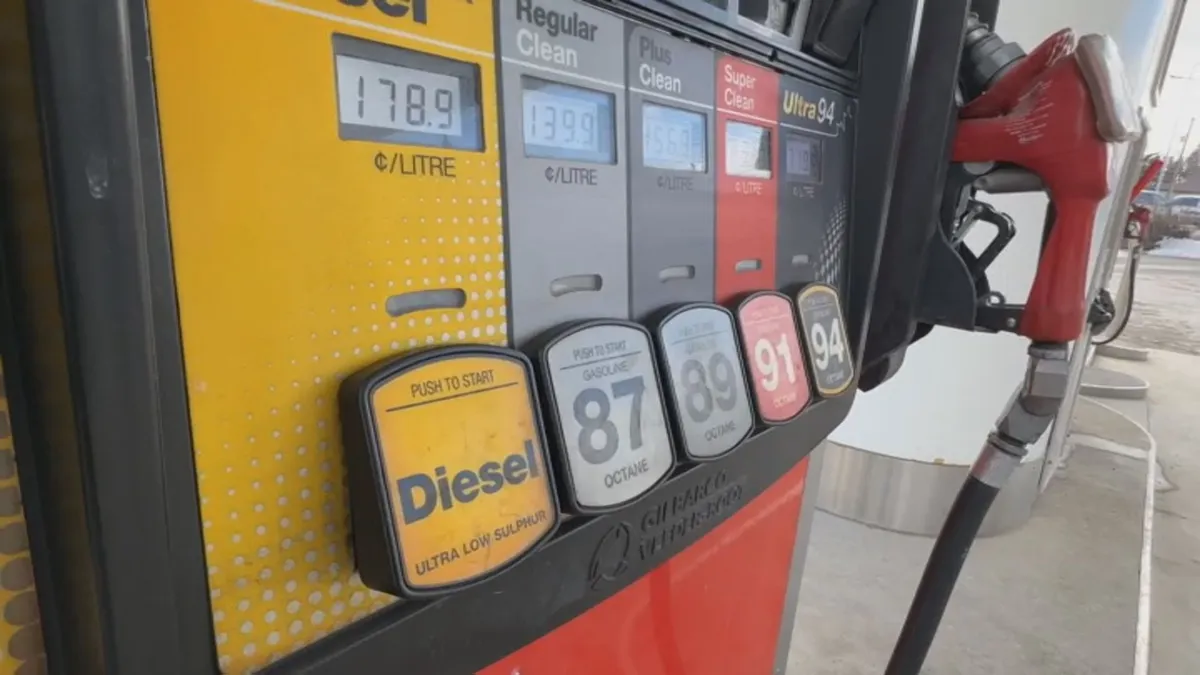
Gas prices across Canada are seeing significant fluctuations, primarily driven by ongoing geopolitical tensions. As of March 24, 2026, Windsor’s average gas price reached 177.9 cents per litre, while Calgary’s average stood at $1.756 per litre. These changes are a direct consequence of a recent drop in oil prices, which fell more than 10 percent on Monday before rebounding on Tuesday.
The situation is further complicated by the closure of the Strait of Hormuz to most vessels due to threats from Iran, a critical passageway for approximately 20-25 percent of the world’s oil supply. This geopolitical instability has resulted in over 4,200 deaths in the ongoing conflict in the Middle East, exacerbating concerns over oil supply and prices.
Dan McTeague, a prominent energy analyst, predicts a potential 10 cent drop in wholesale gas prices by Wednesday. This forecast aligns with the recent volatility in oil prices and reflects the uncertainty surrounding the market. In Pembroke, gas prices are reported as low as $1.59.8 per litre, indicating regional disparities in pricing.
Patrick De Haan from GasBuddy remarked, “we’re in uncharted territory” regarding oil price forecasting due to the U.S. war in Iran. He emphasized the importance of monitoring oil price trends, stating, “Stay on top of the situation; if you see oil prices plummeting, that’s a pretty good indicator of what could happen.” This highlights the interconnectedness of global events and local gas prices.
The surge in gas prices is attributed to the global unrest stemming from the war in the Middle East. In Windsor, prices have increased by 12 cents from last week and are up 44 cents compared to the period before the war began.
Details remain unconfirmed regarding the exact timeline of future gas price changes and the outcome of ongoing negotiations between the U.S. and Iran. The potential for further escalation or de-escalation in the conflict remains uncertain, leaving consumers and analysts alike in a state of anticipation.
