Introduction
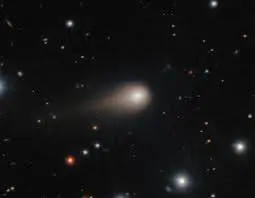
The recent discovery of interstellar comet 3I ATLAS has captured the attention of astronomers and space enthusiasts alike. This celestial object, first identified in December 2021 by the ATLAS (Asteroid Terrestrial-impact Last Alert System) survey, has sparked significant interest due to its origin from beyond our solar system. The study of interstellar comets like 3I ATLAS is crucial as they provide invaluable insights into the early solar system and potentially the conditions that led to the formation of planetary systems.
Details of the Discovery
3I ATLAS was first detected when it was approximately 26 million miles from Earth and was observed to be travelling at a speed of about 110,000 miles per hour. Initial analyses indicated that it is composed primarily of ice and dust, similar to other comets but with variations that suggest a different origin. NASA’s observations, including data collected from the Hubble Space Telescope, reveal that this comet has a highly elongated orbit, which is characteristic of objects originating from the interstellar medium.
The Importance of 3I ATLAS
Understanding 3I ATLAS is vital for several reasons. As the first interstellar comet confirmed to be on a hyperbolic trajectory, it offers a unique opportunity to study the physical and chemical properties of a body that has originated from outside our solar system. Scientists hope that analysing 3I ATLAS will enhance their understanding of how comets are formed and evolved over billions of years in different stellar environments. Additionally, such studies could shed light on the building blocks of life and the basic materials that might exist elsewhere in the universe.
Observational Opportunities
The comet is expected to reach its perihelion, or closest approach to the Sun, in mid-2023. Following this, astronomers will have improved opportunities to study its tail and coma as they react to solar radiation. NASA, alongside various astronomical organisations, is preparing for an extensive observation campaign, harnessing ground-based telescopes and space-based equipment. There is an anticipation that the insights gained could lead to advancements in both astrophysics and planetary science.
Conclusion
Interstellar comet 3I ATLAS marks a significant milestone in our exploration of the cosmos. As researchers continue to gather data, this comet could reshape our understanding of how celestial bodies from foreign star systems interact with our own, paving the way for future explorations. The ongoing study of 3I ATLAS holds the potential to answer fundamental questions about the origins of comets and the broader implications they bear for life beyond Earth. As we continue to unlock the secrets of our universe, the findings on this remarkable object will be a significant contribution to the field of astronomy.
