Introduction
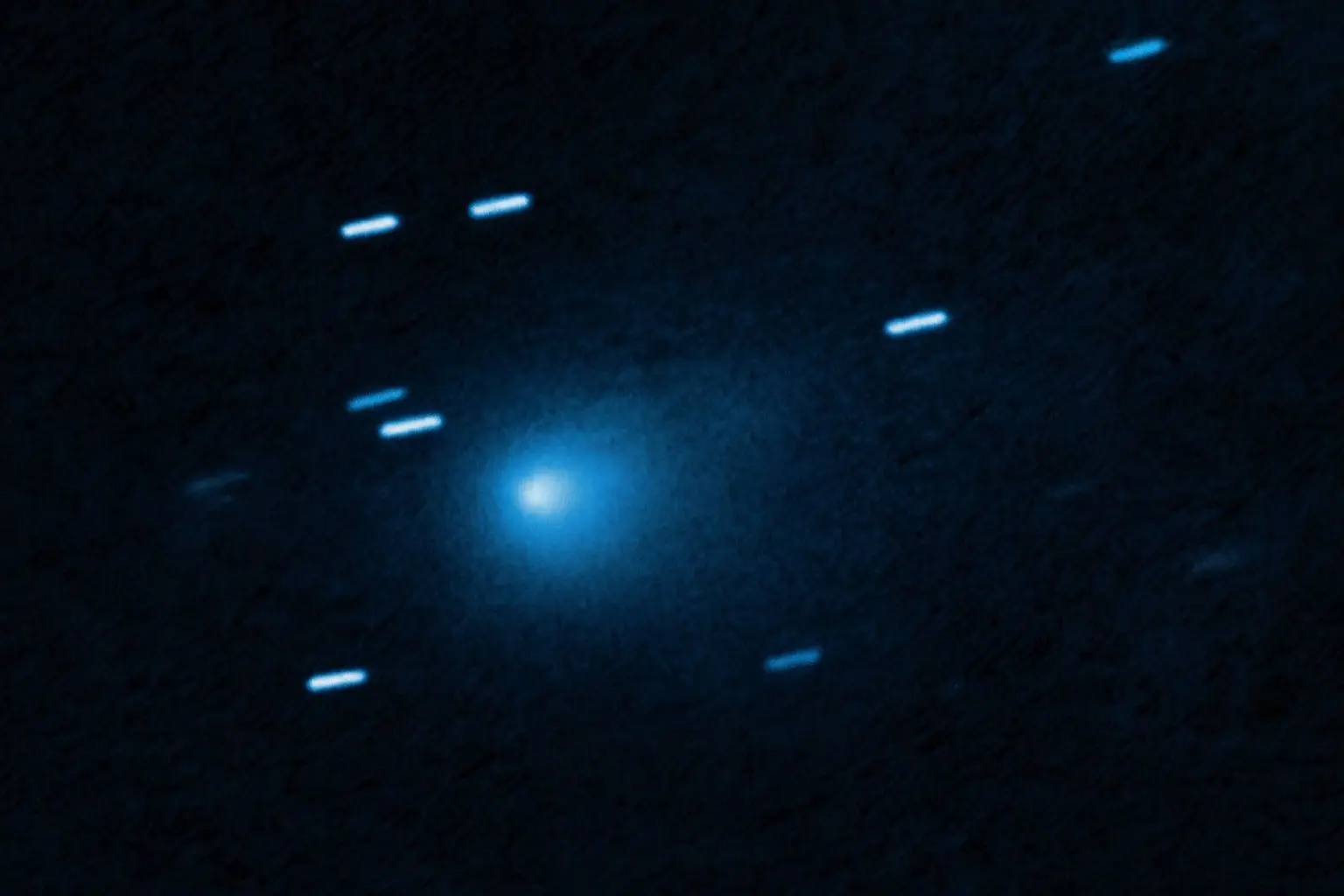
The discovery of interstellar objects has captured the attention of astronomers and space enthusiasts alike, highlighting the boundaries of our solar system and the mysteries of the region beyond. Among these cosmic wanderers is interstellar comet 3I Atlas, which has recently garnered media attention and sparked interest in the scientific community. Understanding 3I Atlas is crucial as it expands our knowledge of the origins and behaviour of comets from other solar systems.
What is Interstellar Comet 3I Atlas?
Interstellar comet 3I Atlas was first detected in October 2021 by the Asteroid Terrestrial-impact Last Alert System (ATLAS) in Hawaii. Its classification as an interstellar comet means that it originates from outside our solar system, providing a unique perspective into the formation of other planetary systems. 3I Atlas is particularly intriguing because it appears to have a hyperbolic trajectory; distinct from the elliptical orbits typical of solar system bodies.
Current Observations and Studies
As 3I Atlas approaches the inner solar system, multiple observatories worldwide have engaged in an extensive monitoring campaign to gather crucial data on its composition, trajectory, and behaviour. Utilising high-power telescopes, researchers have noted that the comet exhibits a comae with significant activity suggesting it is potentially rich in volatile compounds. The light curves and spectral analysis conducted indicate that 3I Atlas is exhibiting a brightness consistent with that of many comets, thus capturing the attention of both amateur astronomers and professional researchers alike.
Scientific Significance
The significance of interstellar comet 3I Atlas lies not just in its celestial journey, but in what its study can reveal about the processes that govern the formation of stars and planetary systems across the galaxy. By analysing the physical characteristics of 3I Atlas, scientists hope to gain insights into the chemical evolution of protoplanetary disks and understand how different materials in space can lead to the formation of diverse planetary bodies. Furthermore, studying such objects may yield information relevant to the search for extraterrestrial life, enhancing our understanding of chemical pathways on other worlds.
Conclusion
Interstellar comet 3I Atlas serves as a cosmic ambassador from beyond our solar system, providing a rare opportunity to glimpse into the uncharted territories of space. With continued observations and research, the scientific community is poised to unlock new knowledge that can redefine our understanding of the universe. As technology advances and more interstellar objects are discovered, each will undoubtedly contribute to the ever-expanding narrative of cosmic exploration, offering a reminder of the vastness we have yet to comprehend.
