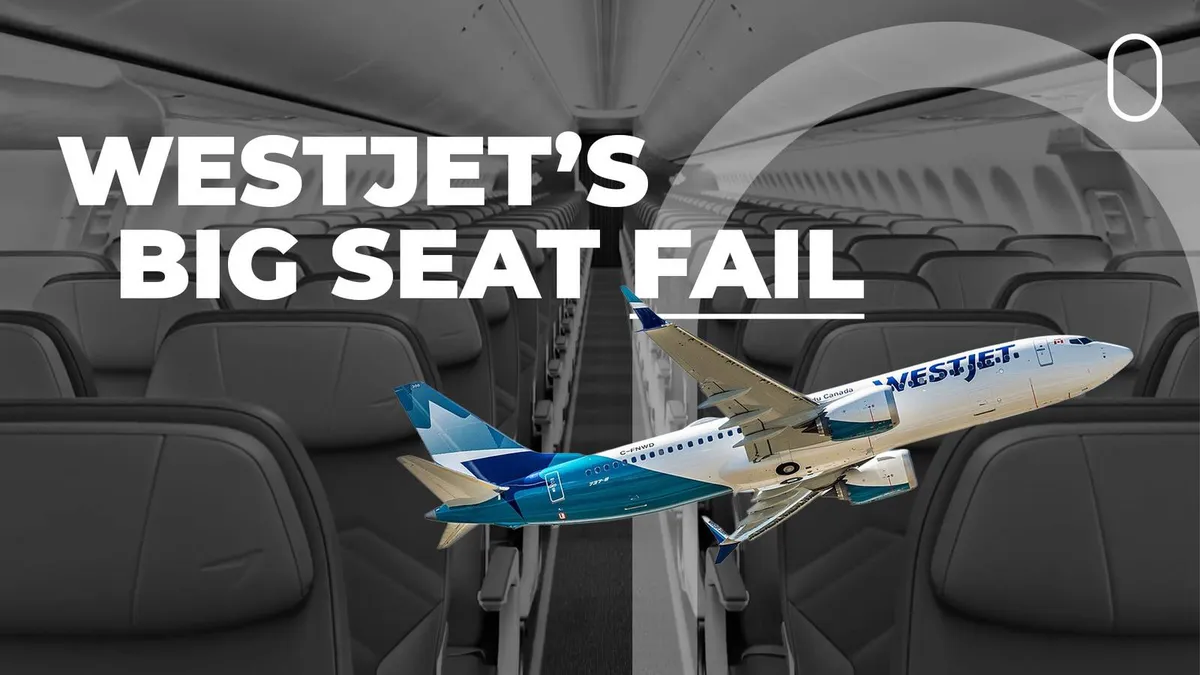
In late 2025, a flight attendant raised significant safety concerns regarding WestJet’s reconfigured seating layout, which had been altered to increase the number of seats from 180 to 174 by adding an extra row. This change resulted in reduced legroom, leading to a serious incident on November 29, 2025, when a passenger, Rob Noble, who stands at 6’3″, became physically trapped in his seat during a flight from Cancun to Regina.
The flight attendant described the seating configuration as a ‘hazard’ and reported the situation to Transport Canada on December 5, 2025. In the safety hazard report, the attendant emphasized the ‘imminent risk’ posed to passengers, noting that a real obstruction had occurred and could happen again under similar conditions.
Lindsay Noble, Rob’s wife, expressed her frustration, stating, “It was not safe for him to be sitting in that seat.” This incident has raised alarms about the safety of the densified seating layout, which was implemented following a safety and certification process that Transport Canada oversaw.
Despite the reported risks, Transport Canada does not specify a minimum seat pitch in national aviation regulations, which complicates the situation further. The lack of clear guidelines has left many questioning the safety of such configurations.
In response to the growing concerns, WestJet announced plans to revert the seating layout back to its original configuration by January 16, 2026, and aims to convert all remaining reconfigured planes by the end of 2026. The airline stated that all modifications were completed in accordance with Transport Canada’s rigorous airworthiness standards and their internal safety requirements.
As of now, Transport Canada has committed to monitoring WestJet’s management of the risks associated with the new seating arrangement. However, details remain unconfirmed regarding the completion of the investigation into the complaint from the WestJet employee.
This sequence of events highlights the critical importance of passenger safety in air travel and raises questions about the regulatory framework governing airline seating arrangements. The implications of these incidents extend beyond WestJet, potentially affecting industry standards and passenger experiences across the board.
