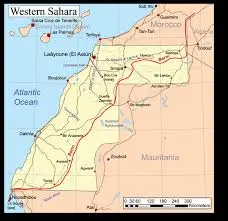
Introduction
The conflict in Western Sahara is one of the longest-running territorial disputes in modern history, significantly impacting regional stability and international relations. Located in North Africa, Western Sahara has been claimed by both Morocco and the Sahrawi Arab Democratic Republic (SADR), leading to a complex situation that involves issues of sovereignty, self-determination, and human rights. Understanding this conflict is crucial, as it not only affects the lives of those within its borders but has broader implications for international law and geopolitical dynamics.
The Historical Context
The conflict dates back to the mid-20th century when Western Sahara was a Spanish colony. After Spain’s withdrawal in 1975, Morocco and Mauritania sought to annex the territory, a move that was met with resistance from the Polisario Front, a liberation movement representing the Sahrawi people. Following years of guerrilla warfare, a UN brokered ceasefire was established in 1991, which has yet to result in a final political settlement. The Sahrawi people, still awaiting a promised referendum on self-determination, continue to live in uncertain conditions, with many in refugee camps in Algeria.
Recent Developments
In recent months, the situation in Western Sahara has escalated. Morocco has increased its military presence in the region, leading to heightened tensions with the Polisario Front, which resumed hostilities in late 2020 after years of ceasefire. The international community remains divided on the issue, with some countries, including the United States, recognising Morocco’s sovereignty over the territory, while others support the right of the Sahrawi people to self-determination.
International Reactions
International organisations, including the United Nations, have called for renewed efforts to resolve the conflict peacefully. Reports from human rights organisations highlight ongoing abuses in the region, which underline the urgent need for dialogue and negotiation. The African Union has also been involved, advocating for a resolution that respects the right of the Sahrawi people.
Conclusion
The Western Sahara conflict remains a critical issue that reflects larger questions about colonial legacy, sovereignty, and human rights. As tensions mount and geopolitical interests converge, it is imperative for the global community to work towards a comprehensive and just resolution that prioritises the voices and rights of the Sahrawi people. Continued international attention and engagement could pave the way for dialogue and potentially bring about peace and stability to this historically contentious region.
