Introduction
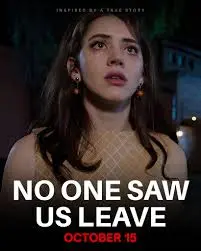
The phrase ‘No One Saw Us Leave’ has recently captured attention across various media, resonating deeply with discussions on privacy, anonymity, and the human experience in an ever-watchful world. This concept is particularly relevant today as debates around surveillance, personal autonomy, and social alienation have intensified, prompting a reevaluation of how we experience freedom and solitude.
The Context
This phrase has been highlighted in several cultural references, from literature and music to recent social media trends. In a time when personal lives are broadcasted to the world via social platforms, the idea of slipping away unnoticed stands as a counter-narrative. It suggests a longing for escape—not only from the physical world but from digital scrutiny as well.
Recent studies indicate that individuals increasingly desire anonymity, particularly amid the rise of social media platforms where every action is documented and shared. A survey conducted by the Pew Research Center revealed that around 60% of adults express concern about their privacy online, asserting that they often feel as though they are being watched. This sentiment plays into the allure of the idea that one could leave without anyone noticing.
Real-Life Implications
The phrase gained notoriety during various public moments, such as protests where individuals left without attracting attention to avoid surveillance. 2023 has seen movements advocating for privacy rights, further intensifying conversations around personal freedom and civil liberties. In particular, gatherings and spontaneous acts now require greater discretion with heightened concerns over data capturing and civil liberties violations.
Among the youth, the phrase resonates uniquely, as they navigate online identities versus personal realities. It evokes a sense of nostalgia for simpler times where such escapes were more feasible, prompting them to contemplate their very existence within society’s digital maze.
Conclusion
In conclusion, ‘No One Saw Us Leave’ serves as a symbol for the contemporary quest for privacy and the rejuvenating value of unnoticed escapes in an interconnected world. As the discussions surrounding surveillance and personal freedoms continue, it remains to be seen how society will adapt and respond to the ongoing duality of visibility and anonymity. The phrase encourages readers to reflect on their own lives—are we truly seen, or have we unknowingly carved out spaces where our absence goes unnoticed?
