Introduction
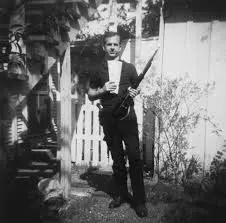
The assassination of President John F. Kennedy on November 22, 1963, marked a turning point in American history, sparking controversy and conspiracy theories that persist to this day. Central to this tragedy was Lee Harvey Oswald, whose life and motives have been dissected extensively in the decades since. Understanding Oswald is crucial to comprehending the events of that fateful day and its aftermath, making him an enduring figure in American discourse.
Life Before the Assassination
Born on October 18, 1939, in New Orleans, Louisiana, Lee Harvey Oswald experienced a troubled childhood, marked by family instability and frequent relocations. He enlisted in the United States Marine Corps at 17, where he developed an interest in Marxist ideology. After serving in Japan, he defected to the Soviet Union in 1959, a move that placed him under intense scrutiny upon his return to the United States in 1962.
The Assassination of JFK
On that tragic November day in Dallas, Texas, Oswald was arrested for the murder of President Kennedy. He was captured shortly after the assassination as he attempted to escape the scene. During his incarceration, Oswald denied any involvement in the crime, famously shouting, “I’m just a patsy!” This phrase has become a rallying cry for those who believe in various conspiracy theories surrounding JFK’s assassination.
Investigations and Theories
The Warren Commission, appointed by President Lyndon B. Johnson, concluded in 1964 that Oswald acted alone in killing Kennedy. Despite this, numerous alternative theories have emerged, implicating various parties, including the Mafia, CIA, and even members of the government. Theories have gained traction, fueled by public skepticism and a desire to explain the inexplicable. Oswald’s moment of infamy remains entrenched in the lore of American conspiracy culture.
The Aftermath and Legacy
Oswald was shot and killed two days after his arrest by nightclub owner Jack Ruby, further complicating the narrative surrounding the assassination. His death left many questions unanswered and solidified his place in history as a controversial figure. Today, 60 years later, the questions remain: Was Lee Harvey Oswald truly a lone gunman, or was he part of a larger plot? The ongoing debates and discussions reflect not only the enduring fascination with JFK’s assassination but also a broader scrutiny of historical truth and official narratives.
Conclusion
Lee Harvey Oswald’s role in the assassination of JFK is a compelling chapter in American history that continues to invoke interest and debate. What does this say about our understanding of truth and conspiracies? As new evidence and historical analyses emerge, the quest for clarity surrounding Oswald’s life and the events of that day remains crucial for both historians and the general public, highlighting the complex relationship between fact, fiction, and memory.
