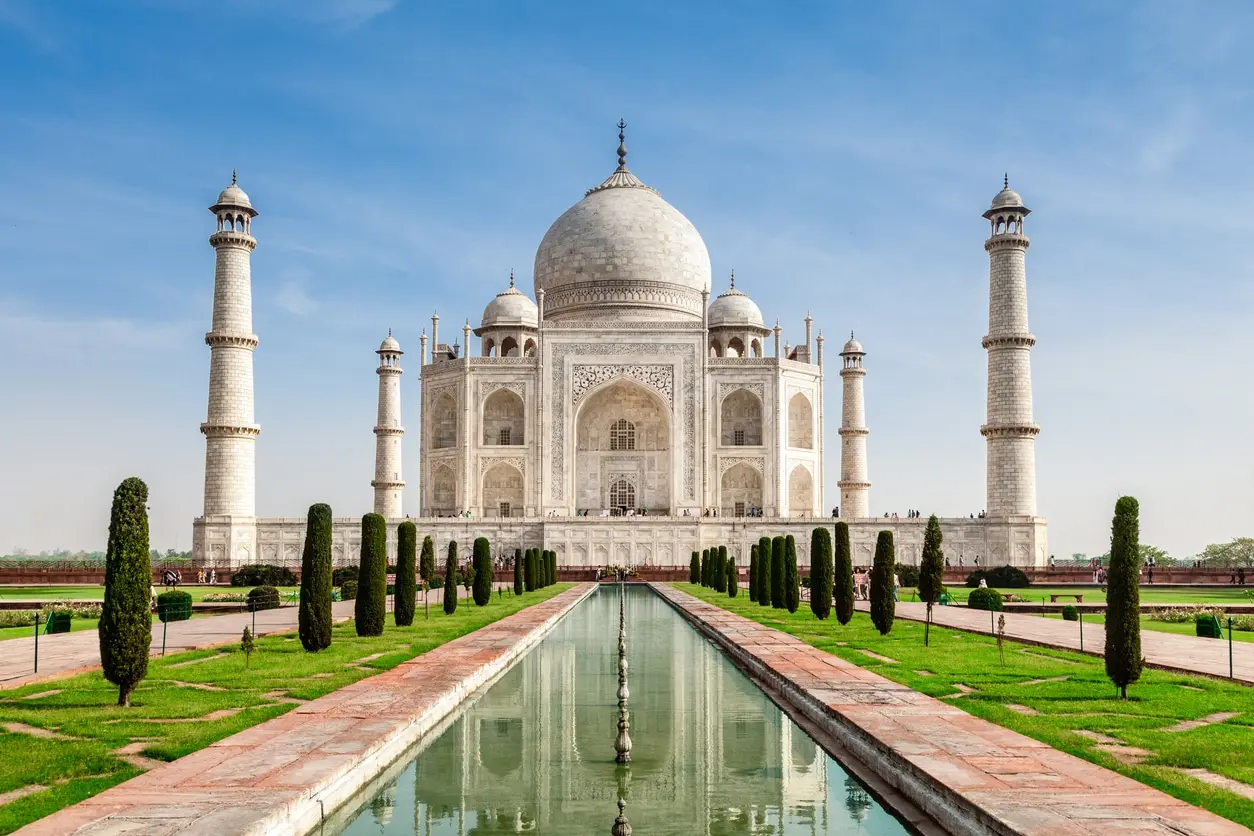
Introduction to the Taj Mahal
The Taj Mahal, located in Agra, India, is one of the most iconic and recognizable structures in the world. Erected in memory of Mumtaz Mahal by her husband, Emperor Shah Jahan, this UNESCO World Heritage Site is celebrated not only for its exquisite beauty but also for its rich historical significance. Since its completion in 1643, the Taj Mahal has stood as a testament to Mughal architecture and romantic devotion, attracting millions of visitors each year from across the globe.
Historical Background
The construction of the Taj Mahal began in 1632 and took approximately 22 years to complete. The mausoleum was commissioned by Shah Jahan to honour his beloved wife, who died during childbirth. Inspired by Persian architecture, the Taj Mahal combines elements from Islamic, Persian, Ottoman Turkish, and Indian architectural styles. Its stunning white marble façade, intricate inlay work, and symmetrical gardens serve not only as a resting place for the Emperor’s beloved but also as a symbol of the enduring love between the couple.
Recent Events and Preservation Efforts
In recent years, the Taj Mahal has faced challenges related to environmental pollution and the effects of climate change. Concerns over the structure’s discolouration and structural integrity have prompted Indian authorities to implement various preservation strategies. In 2022, the Archaeological Survey of India launched a major initiative to restore the monument, including the cleaning of the marble using advanced technologies and the planting of trees in the surrounding areas to improve air quality. Efforts are being made to balance the needs of tourism with the preservation of this national treasure.
Significance for Tourists and Cultural Heritage
As one of the Seven Wonders of the World, the Taj Mahal attracts an estimated 7-8 million tourists each year. It serves as a vital component of India’s cultural heritage, providing insights into the country’s rich history and artistic achievements. The site plays a crucial role in the local economy, drawing visitors who contribute to the tourism sector while also sparking interest in India’s historical narratives. Educational programs and guided tours are increasingly focusing on the importance of preserving such a monumental site for future generations.
Conclusion
The Taj Mahal stands as a powerful emblem of love and an enduring representation of India’s glorious past. Its historical significance, aesthetic beauty, and cultural relevance continue to captivate audiences worldwide. As preservation efforts gain momentum, the monument not only reminds us of the romantic tale that inspired its construction but also calls for collective responsibility in maintaining its integrity against modern challenges. The future of the Taj Mahal hinges on our ability to cherish and protect this global treasure for the ages to come.
