Introduction
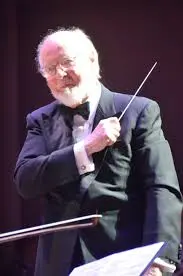
John Williams, a name synonymous with memorable film scores, has captivated audiences worldwide with his iconic compositions. From ‘Star Wars’ to ‘Harry Potter,’ Williams has penned some of the most recognized soundtracks in cinematic history. As a composer whose work transcends generations, his contributions to film music are immeasurable, making him an essential figure in contemporary culture.
Career Highlights and Achievements
Born on February 8, 1932, in Floral Park, New York, Williams’s passion for music surfaced at an early age. After studying at Juilliard, he served in the Air Force and subsequently began his career in the film industry as an orchestral arranger and conductor. His breakthrough came in the 1970s when he started collaborating with director Steven Spielberg, resulting in classics like ‘Jaws’ (1975) and ‘E.T. the Extra-Terrestrial’ (1982).
Williams’s ability to create emotional depth and thematic unity has established him as a pivotal figure in film scoring. His work on the ‘Star Wars’ franchise, beginning with the original film in 1977, provided audiences with thrilling melodies that have become cultural touchstones. His memorable score for ‘Schindler’s List’ (1993) showcased his capacity to blend haunting melodies with poignant narratives, earning him the Academy Award for Best Original Score.
Recent Projects and the Future
In recent years, Williams has continued to innovate and contribute to the film industry. In 2021, he composed the score for ‘West Side Story,’ directed by Steven Spielberg, reaffirming his status as a premier composer even into his nineties. At the 2022 Academy Awards, Williams received an honorary Oscar for his career achievements, celebrating over six decades of outstanding contributions to cinema.
With future projects including ‘Indiana Jones 5,’ Williams shows no sign of slowing down. Film enthusiasts and aspiring musicians alike can look forward to the maestro’s ongoing impact on the world of film music.
Conclusion
John Williams’s influence on the landscape of film music is undeniable. He has not only shaped how we experience films but has also set the standard for aspiring composers around the globe. As he continues to compose for new generations of filmmakers and audiences, his legacy as a titan of film music will undoubtedly endure. For those interested in the intersection of cinema and music, studying Williams’s work provides valuable insights into the art of storytelling through sound.
