Introduction
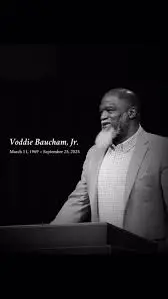
Voddie Baucham is a prominent pastor, author, and speaker known for his passionate advocacy of a faithful and rigorous Christian theology. His work has resonated with many within the evangelical community, making him a significant voice in contemporary discussions about faith, culture, and education. As the debates around social issues and church leadership continue to evolve, Baucham’s insights have become increasingly relevant. This article explores his contributions to theology and his influence in modern Christian circles.
Background and Education
Baucham was born in Los Angeles, California, in 1969 and raised in a Christian household. He earned a degree in Sociology from the University of California, Davis, before later attending the Southwestern Baptist Theological Seminary, where he completed his Master of Divinity and Doctor of Ministry degrees. His academic background, combined with his personal experiences, informs his approach to ministry and education.
Pastoral and Teaching Roles
Voddie Baucham served as the pastor of Grace Family Baptist Church in Spring, Texas. He is also a professor of theology at African Christian University in Zambia, which reflects his commitment to preparing future leaders in the global church. His dual focus on pastoral ministry and theological education allows him to engage deeply with both biblical text and contemporary issues facing Christians today.
Books and Publications
Baucham has authored several influential books, including “Family Driven Faith” and “Expository Apologetics,” which have gained widespread recognition. In these works, he emphasizes the importance of strong family units and the necessity of a robust theological education for believers. Baucham’s writing often challenges readers to engage thoughtfully with their faith, urging them to consider the implications of their beliefs in their everyday lives.
Public Speaking and Influence
As a sought-after speaker, Baucham has addressed numerous conferences and events, sharing his perspectives on issues such as race, education, and the importance of a biblically-informed worldview. His ability to connect with diverse audiences has made him a relevant figure in both African American church contexts and broader evangelical circles. He often shares his personal experiences with racial identity and cultural engagement, helping to foster conversations about race and unity within the church.
Conclusion
Voddie Baucham’s contributions to modern Christianity extend beyond his pastoral and academic roles. His influence as an author and speaker continues to shape discussions on faith, education, and cultural challenges facing believers today. As he navigates the complexities of contemporary society while remaining firmly rooted in his theological convictions, Baucham serves as a powerful voice advocating for a faithful and engaged Christian life. Looking forward, Baucham’s work is likely to inspire and challenge a new generation of Christians to think deeply about their faith and its application in an ever-changing world.
