Introduction to the S&P 500
The S&P 500, short for Standard & Poor’s 500, is one of the most widely followed stock market indices in the world. It represents 500 of the largest companies in the United States and serves as a barometer for the overall health of the U.S. economy and stock market. Understanding the performance and implications of this index is crucial for investors, analysts, and anyone interested in the financial markets.
Current Status of the S&P 500
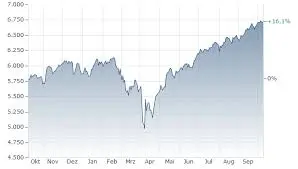
As of October 2023, the S&P 500 has navigated through a complex economic landscape. Following a year marked by volatility and uncertainty due to rising interest rates, inflation concerns, and geopolitical tensions, the index has shown signs of resilience. For instance, recent data from early October revealed that the S&P 500 is up approximately 10% year-to-date, reflecting a rebound from earlier market downturns whilst highlighting the sectors driving this growth.
The technology sector continues to dominate, with major companies like Apple, Microsoft, and NVIDIA contributing significantly to the index’s performance. Financials and consumer discretionary sectors have also seen considerable activity, indicating a shift in consumer spending patterns as economic conditions gradually stabilise.
Factors Influencing the S&P 500
Several key factors influence the movement of the S&P 500. Economic indicators such as GDP growth, unemployment rates, and consumer spending play a significant role. Moreover, the Federal Reserve’s approach to interest rates and inflation will heavily impact investor sentiment and market conditions.
Additionally, global events—including supply chain disruptions and geopolitical issues—continue to affect market dynamics. As companies in the S&P 500 report their earnings quarterly, the results can create ripple effects across the market, emphasising the index’s role as a leading economic indicator.
Conclusion: The Significance of the S&P 500 for Investors
For investors, the S&P 500 serves as a vital tool for building a diversified portfolio. It offers exposure to various sectors and companies, encompassing a broad representation of the U.S. economy. Moreover, the performance of the S&P 500 is often used as a benchmark to gauge the effectiveness of fund managers and investment strategies.
Looking ahead, analysts predict that as economic conditions continue to change, the S&P 500 will likely remain a focal point for market trends. Understanding its movements and the factors that influence it will provide valuable insights for both seasoned investors and those new to the stock market. In summary, the S&P 500 remains a crucial component of financial dialogue, emphasising its relevance in today’s economic environment.
