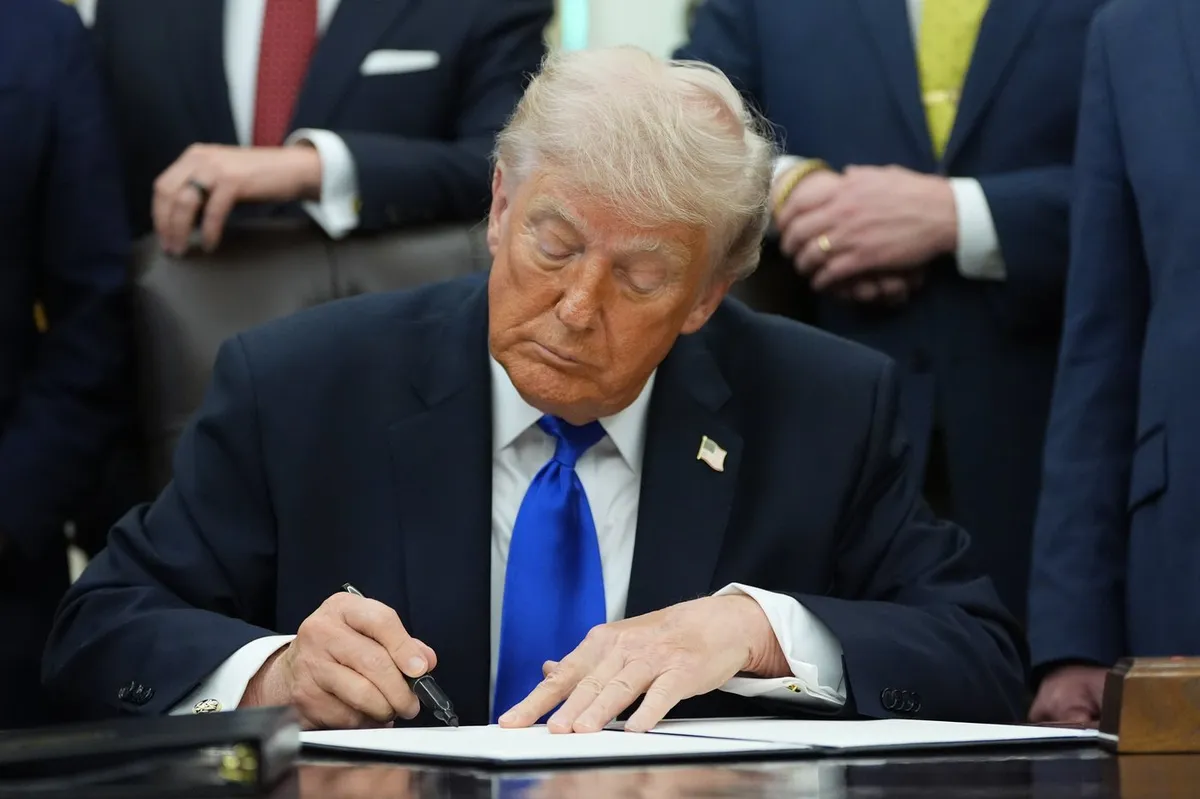
“The EU is not complying with our fully agreed to Trade Deal,” declared President Donald Trump as he announced a 25% tariff increase on cars and trucks from the European Union. This decision comes amid rising tensions regarding adherence to a previously negotiated agreement.
Under the Trump administration, the initial tariff ceiling was set at 15%, later reduced to 10% following a Supreme Court ruling that stated Trump lacked the authority to impose such tariffs unilaterally. The stakes are high—European automakers expected to save between 500 million to 600 million euros monthly under the original deal.
The context here matters because it highlights significant trade imbalances between the U.S. and the EU, valued at approximately 1.7 trillion euros (or $2 trillion) in goods and services as of 2024. Trump’s latest move could disrupt this intricate economic relationship.
The European Commission, represented by Ursula von der Leyen, responded firmly, stating, “A deal is a deal.” This underscores their commitment to maintaining a predictable and mutually beneficial relationship despite Trump’s aggressive tariff strategy.
Hildegard Mueller, an industry expert, warned that “the cost of additional tariffs would be enormous and would likely impact U.S. consumers.” This statement raises an important question: how will American consumers react to higher prices on imported vehicles?
The new tariff rate will take effect next week, leaving little time for negotiations or adjustments. Meanwhile, EU officials have indicated that they are prepared to explore options to protect their interests should the U.S. fail to honor the existing agreements.
This situation reflects broader concerns about national security intertwined with economic policies. Tariffs are often justified through this lens, but they also risk escalating trade wars that can harm both economies.
The upcoming weeks will be crucial as stakeholders assess the full implications of these tariffs on international trade dynamics.
