Introduction
The Elizabeth Line, a significant addition to London’s transport network, officially opened on May 24, 2022. Named after Queen Elizabeth II, this new railway line aims to enhance connectivity across the capital and its surrounding regions. The introduction of the Elizabeth Line marks a pivotal moment in London’s transport history, promising faster and more efficient travel for millions of commuters.
Overview of the Elizabeth Line
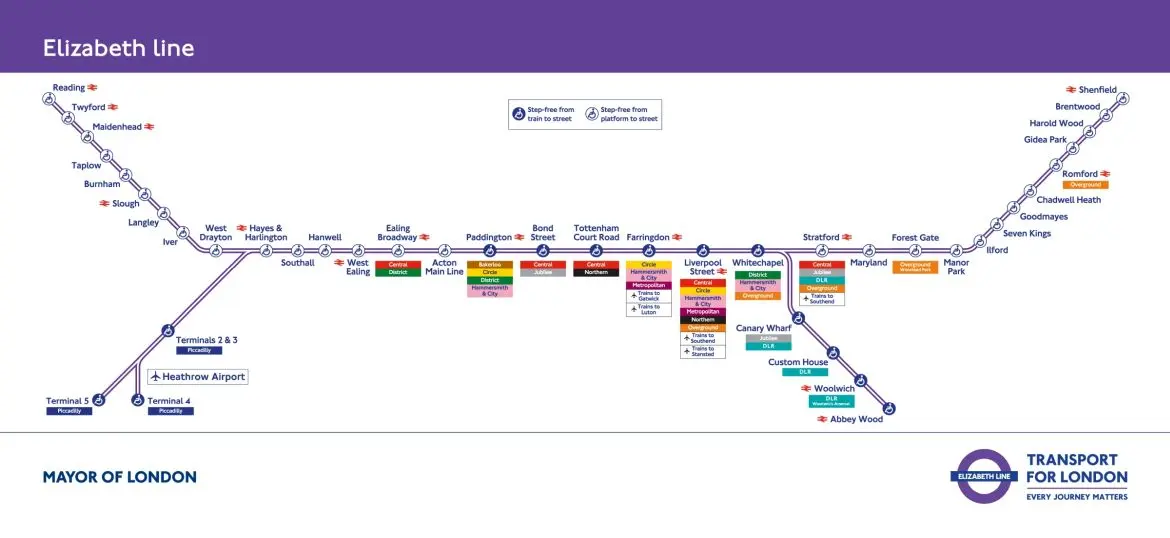
The Elizabeth Line extends 73 miles (118 km) from Reading and Heathrow in the west to Shenfield and Abbey Wood in the east. Featuring 41 stations, including major hubs such as Paddington, Liverpool Street, and Tottenham Court Road, the line provides seamless journeys with connections to existing networks, including the Tube, National Rail, and Crossrail services.
One of the key features of the Elizabeth Line is its innovative design, boasting spacious carriages fitted with state-of-the-art technology. Trains operate at frequencies of up to 24 trains per hour during peak times, reducing journey times significantly. For instance, the trip between Paddington and Canary Wharf takes only 38 minutes, compared to the 56 minutes required by traditional routes.
Impact on Commuting and Local Communities
The launch of the Elizabeth Line has had a far-reaching impact on commuters and local communities. It has been hailed as a triumph for accessibility, with many stations fully equipped with step-free access and other amenities for individuals with reduced mobility. This has made a considerable difference for disabled passengers and families with prams.
The Elizabeth Line is expected to boost the local economy by encouraging investment and regeneration in areas along its route. Properties near new stations have seen a surge in value, as the promise of efficient transport links attracts both residents and businesses. This effect is particularly notable in areas that were previously considered less accessible.
Future Developments and Significance
Looking ahead, the Elizabeth Line is more than just a transport service; it represents a vision for a modern and integrated transport system in London. Future developments include plans to improve connectivity further and expand services to accommodate growing demand. As London’s population continues to rise, the Elizabeth Line will play a crucial role in alleviating congestion across the existing transport network.
In conclusion, the Elizabeth Line stands out as a landmark project that signifies the ongoing evolution of London’s transport infrastructure. Its impact on commuting patterns, economic growth, and the accessibility of the city cannot be understated. As the line continues to develop and adapt to the needs of Londoners, it will undoubtedly remain at the forefront of discussions surrounding urban transport for years to come.
