Introduction
The Elizabeth Line, officially opened in May 2022, has quickly become a vital part of London’s transport network. Named in honour of Queen Elizabeth II, this new rail service connects the east and west of London, enhancing accessibility and reducing travel times for millions of commuters. Its significance cannot be overstated as it represents a leap forward in urban transport infrastructure, much needed in a city plagued by congestion.
Key Features of the Elizabeth Line
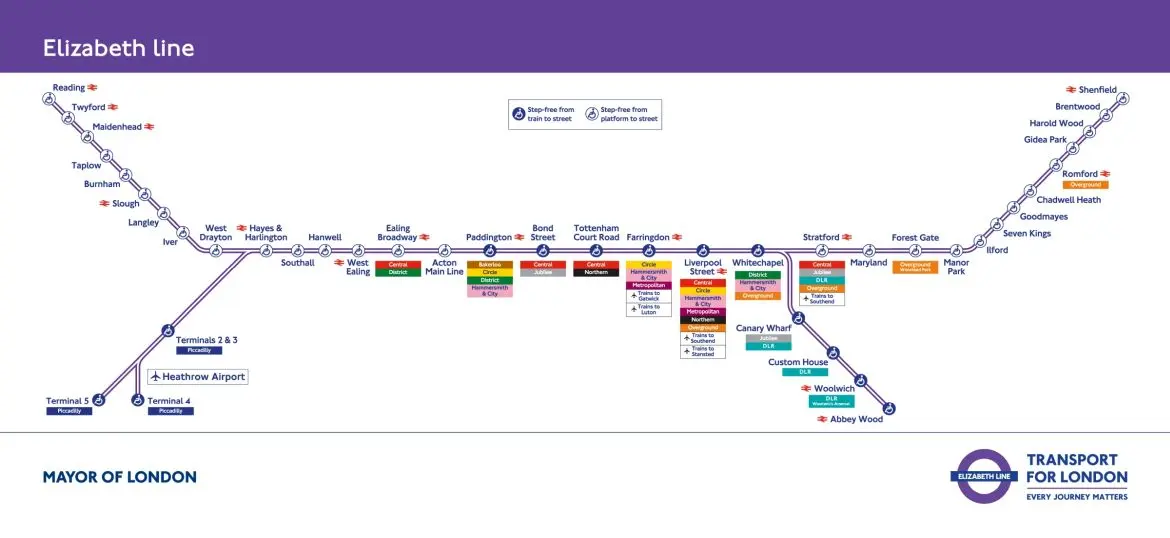
Spanning over 100 kilometres, the Elizabeth Line runs from Reading and Heathrow in the west to Shenfield and Abbey Wood in the east, with central London stations including Bond Street and Liverpool Street. The line features 41 accessible stations, highlights during its design include enhanced concourse spaces, platform screen doors, and modern train designs, which all contribute to improved safety and comfort for passengers.
Impact on Commute and Economy
One of the most transformative aspects of the Elizabeth Line is its positive impact on daily commuting. The journey from Paddington to Liverpool Street has been cut down from more than 30 minutes to under 20 minutes, significantly benefiting business professionals and tourists alike. By increasing the frequency of rail services and improving connectivity to key business districts, it drives economic activity in areas previously underdeveloped.
Data from Transport for London (TfL) highlights that more than 200 million journeys are expected to be made on the Elizabeth Line each year, easing pressure on congested tube lines and buses, particularly during peak hours. The enhancement of the transport network is predicted to encourage growth in the housing market within London’s travel zones due to the improved accessibility.
Community and Environmental Benefits
In addition to economic factors, the Elizabeth Line is a commitment to sustainability. It operates electric trains and is designed to help reduce road congestion, thereby lowering carbon emissions associated with transport. Moreover, the new infrastructure has spurred development projects around stations, contributing to the community’s growth and revitalising areas that may have been overlooked.
Conclusion
The Elizabeth Line is more than just a new transport route; it is a revolutionary step in London’s efforts to modernise its transport infrastructure and cope with the demands of a growing population. With ongoing developments and potential expansion plans, the line could continue to evolve, further enhancing connectivity across the capital. As London’s transport system adapts to the needs of its residents, the Elizabeth Line stands as a beacon of progress, symbolising innovation and a bright future for urban transit.
