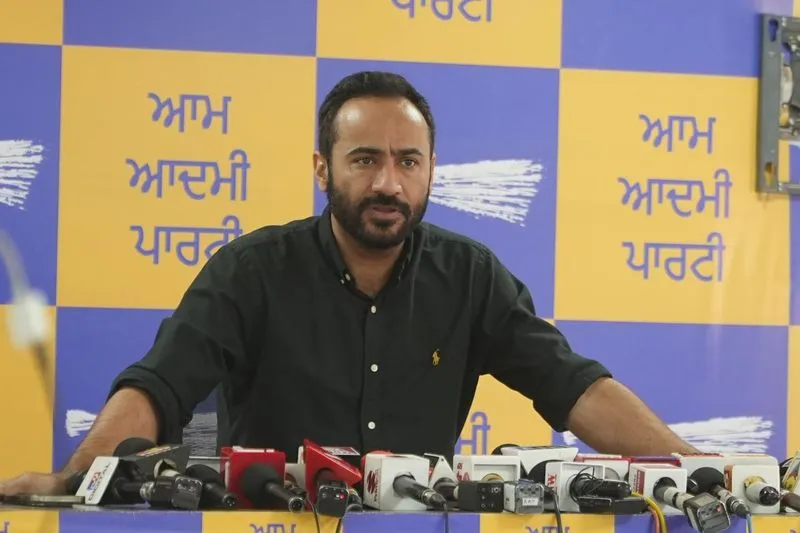
Raghav Chadha, a prominent member of the Aam Aadmi Party (AAP) and a Rajya Sabha MP, finds himself at the center of a political storm. His alleged deal with Amit Shah has triggered a significant shift in Punjab politics. In a startling turn of events, seven AAP MPs defected to the Bharatiya Janata Party (BJP) on April 24, 2026.
This mass defection raises questions about the stability of AAP in Punjab. The BJP stands accused of orchestrating ‘Operation Lotus,’ a strategy aimed at poaching opposition members to strengthen its own ranks. Chadha allegedly played a pivotal role in this operation, striking a deal that some insiders claim was aimed at weakening AAP’s foothold.
Baltej Pannu, an AAP leader, claimed that Chadha was instructed to bring the seven MPs into the BJP fold. “He has been tasked with breaking the party by terrorising the MPs through ED and forcing them to sign on blank papers,” Pannu stated. Such allegations paint Chadha as a pawn in a larger conspiracy against his own party.
Gurmeet Singh Meet Hayer, another party member, expressed outrage: “Chadha had ‘stabbed Punjab and the party in the back’ by allegedly striking a deal with Amit Shah.” This sentiment reflects deep divisions within AAP as it grapples with this unexpected betrayal.
Interestingly, the defected MPs assert they are not liable for disqualification. They argue that their numbers surpass two-thirds of the AAP Parliamentary party in Rajya Sabha, potentially complicating legal challenges against their move.
Chadha’s actions have drawn scrutiny not just from within his party but also from political observers who are closely monitoring this unfolding drama. The BJP’s strategy appears calculated—aiming to destabilize opposition parties by creating internal rifts.
The current strength of the BJP-led National Democratic Alliance in the Upper House stands at 141 seats. This recent development could further bolster their position if more defections follow. But what does this mean for the future of AAP?
Officials have not confirmed any further plans regarding Chadha or additional defections. However, this incident clearly illustrates how political alliances can shift rapidly in India’s volatile landscape.
As this situation develops, all eyes will be on Raghav Chadha and his next moves—both for himself and his party. Will he remain loyal to AAP or continue down this controversial path?
