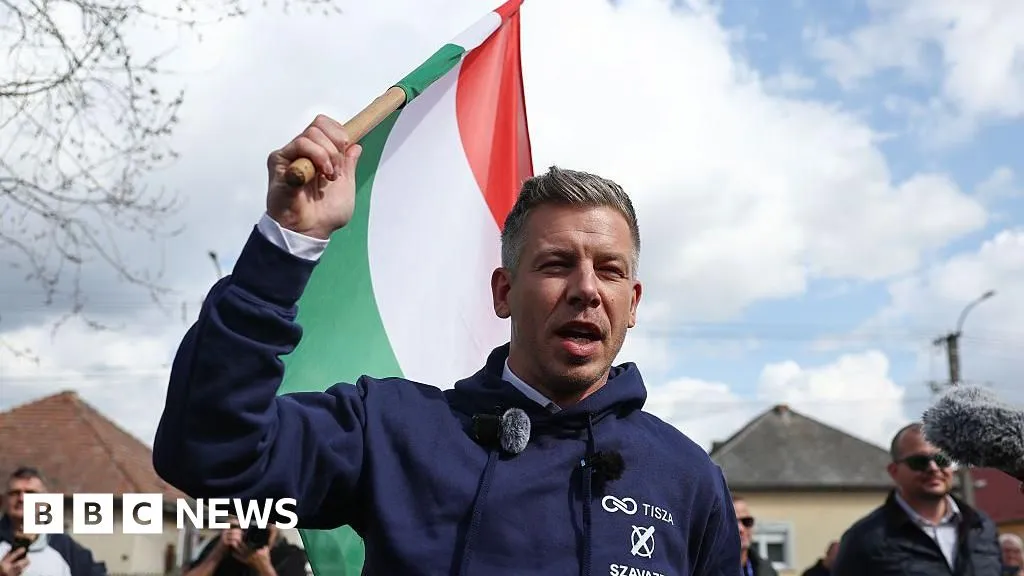
Péter Magyar is making waves in Hungary’s political landscape, having built the largest opposition party in the country after 16 years of Fidesz rule. His rise to prominence comes at a time when the political climate is fraught with tension and uncertainty, particularly regarding issues of democracy and corruption. Magyar’s Tisza party, also known as the Party of Respect and Freedom, won a notable 29.6 percent of the vote in the European Parliament elections in June 2024, signaling a significant shift in voter sentiment.
Previously a member of Fidesz, Magyar maintained close ties with key figures in the ruling party, including Prime Minister Viktor Orbán. However, his political journey took a dramatic turn following his divorce from Judit Varga, Hungary’s minister of justice since 2019. The split, which occurred in March 2023, was partly attributed to political disagreements, highlighting the personal stakes involved in Hungary’s political arena. Magyar’s relationship with Varga became even more contentious when he secretly recorded a conversation with her regarding government interference in a corruption case.
Magyar’s criticisms of the government intensified after a pardon scandal involving Varga, where he took to social media to express his discontent. His commitment to restoring a democratic rule-of-law state has resonated with many voters, as he promises to adopt anti-corruption measures and join the European Public Prosecutor’s Office. This pledge is particularly significant given the widespread concerns about corruption within the current administration.
His party’s electoral success is underscored by the impressive 1.3 million voters who supported Tisza, a stark contrast to Fidesz’s 45 percent share of the vote. This shift in voter allegiance suggests a growing discontent with the ruling party’s governance. Magyar’s political strategy includes limiting the prime minister’s term to eight years, a move that would retroactively affect Orbán, further intensifying the political rivalry.
Magyar’s grassroots approach has also been notable, with reports indicating he walked 250 kilometers from Budapest to Oradea and visited around 500 locations during his parliamentary election campaign. His rally on March 15 attracted 50,000 people, while the National March on April 6, 2024, drew an impressive 100,000 attendees, showcasing the mobilization of support for his cause.
Despite his rising popularity, Magyar faces accusations of attempting to extinguish all opposition parties except his own. This claim raises questions about the future of political plurality in Hungary and whether his vision for democracy can be realized without stifling dissent. As he continues to navigate the complexities of Hungarian politics, the stakes remain high for both him and the nation.
Looking ahead, the political landscape in Hungary is poised for further developments as Magyar’s Tisza party seeks to solidify its position against Fidesz. The uncertainty surrounding the potential for political reform and the implications of Magyar’s promises will be closely watched by both supporters and critics alike. Details remain unconfirmed regarding the full extent of his plans and their feasibility in a challenging political environment.
