What do recent developments reveal about South Korea’s growing influence in Poland? The answer lies in a series of strategic agreements and investments that signify a deepening partnership between the two nations.
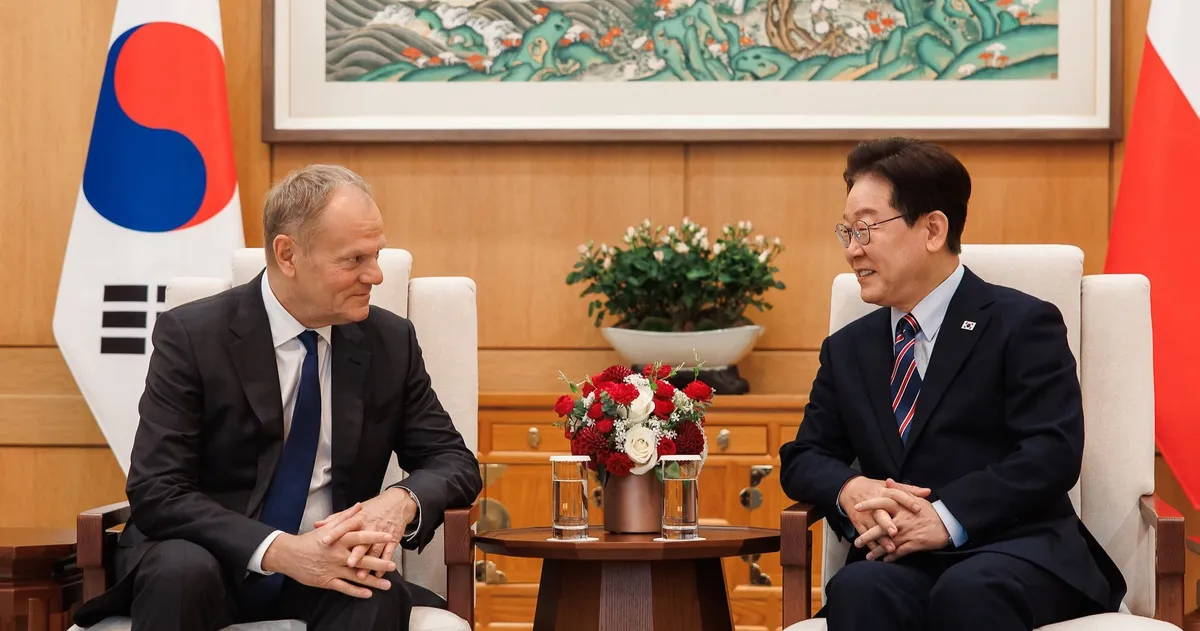
On April 13, 2026, in Seoul, South Korea, Poland and South Korea signed a landmark agreement aimed at enhancing cooperation in various sectors, including defense, energy, science, and infrastructure. This agreement is particularly significant as Poland’s Prime Minister Donald Tusk described South Korea as his country’s “most important ally after the United States.” This statement underscores the strategic importance of South Korea in Poland’s foreign policy, especially in the wake of heightened security concerns in Europe.
Tusk’s visit to South Korea marks the first by a Polish prime minister in 27 years, highlighting the renewed interest and commitment to strengthen ties. Poland has been NATO’s largest importer of arms over the past five years, with South Korea emerging as the biggest supplier of military hardware, accounting for 47% of Poland’s military imports. This relationship has been bolstered by Poland’s defense procurement acceleration following Russia’s invasion of Ukraine in 2022.
In addition to military cooperation, the two countries have also made strides in economic partnerships. A notable agreement allows Poland to produce guided missiles domestically, under a deal valued at over 14 billion zloty (€3.3 billion). This move not only enhances Poland’s defense capabilities but also signifies a shift towards greater self-reliance in military production.
South Korea’s investment in Poland is also noteworthy. Companies like Kumho are planning to establish new plants in Poland, with an investment of $587 million for the first plant in Europe, which is expected to produce six million tyres annually. Furthermore, Daesang Corporation has chosen Poland as the site for its first European kimchi production plant, illustrating the diverse nature of South Korean investments.
Moreover, South Korea’s government agency for creative content has opened an office in Warsaw, further solidifying cultural and economic ties. This move aligns with Tusk’s assertion that “South Korea is already Asia’s biggest investor in Poland,” indicating a robust and growing economic relationship.
Looking ahead, Hyundai Motor Group has announced plans for an investment exceeding $84 billion in South Korea over the next five years, focusing on artificial intelligence, research and development, and optimizing production facilities. This investment will likely have ripple effects on Poland as well, given the interconnected nature of global supply chains and production networks.
As the partnership between Poland and South Korea continues to evolve, it remains to be seen how these developments will impact regional security dynamics and economic landscapes. Details remain unconfirmed regarding the full scope of future collaborations, but the trajectory suggests a strengthening alliance that could reshape the geopolitical landscape in Europe.
