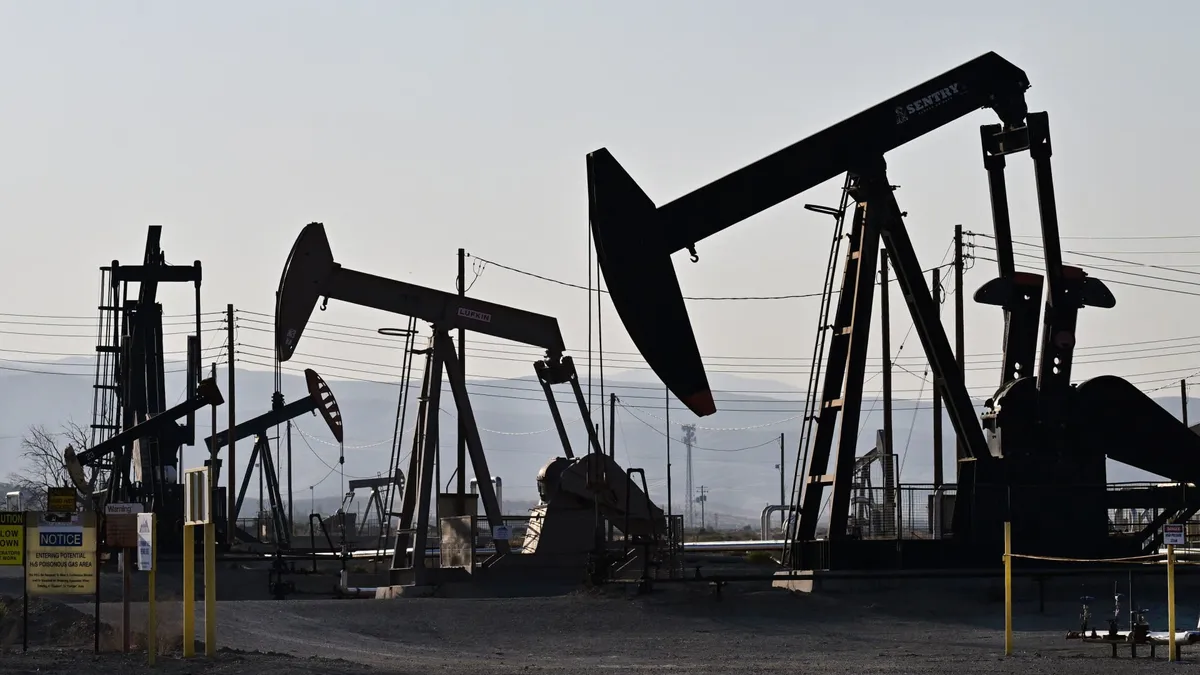
Oil Prices Decline Amid Geopolitical Tensions
Oil prices have seen a significant decline today, with Brent crude trading at $89.31 per barrel, down 9.75%. West Texas Intermediate has also fallen to $85.90, marking a decrease of 9.36%.
This drop follows a surge earlier in the week when oil prices exceeded $100 per barrel, reaching just short of $120 on Monday. The fluctuations are largely attributed to ongoing geopolitical tensions in the Middle East.
In response to these tensions, Iraq has cut output at its main southern oilfields by 70%, reducing production to approximately 1.3 million barrels per day. Kuwait Petroleum Corporation has also begun reducing production and declared force majeure, while Saudi Arabia has started trimming its output as well.
Iran has signaled it could escalate its response if attacks continue, with the Islamic Revolutionary Guard Corps stating that Tehran would not allow “one litre of oil” to be exported from the region if U.S. and Israeli strikes persist.
The conflict, now in its second week, is ensnaring countries and infrastructure critical to the production and transportation of oil and gas worldwide. This situation has led to concerns about supply disruptions, particularly as a fifth of global oil and seaborne gas tankers typically pass through the Strait of Hormuz.
Market analysts are closely monitoring the situation, with Nicholas Mulder stating, “In economic terms, this is already the largest oil supply shock ever.” The uncertainty surrounding the geopolitical landscape is contributing to the volatility in oil prices.
Additionally, governments across Europe and Asia have imposed price caps on fuel in recent days, further complicating the market dynamics.
Details remain unconfirmed regarding how Iran will react if there were a cessation of attacks from the U.S. The duration and impact of the geopolitical tensions on oil prices remain uncertain.
