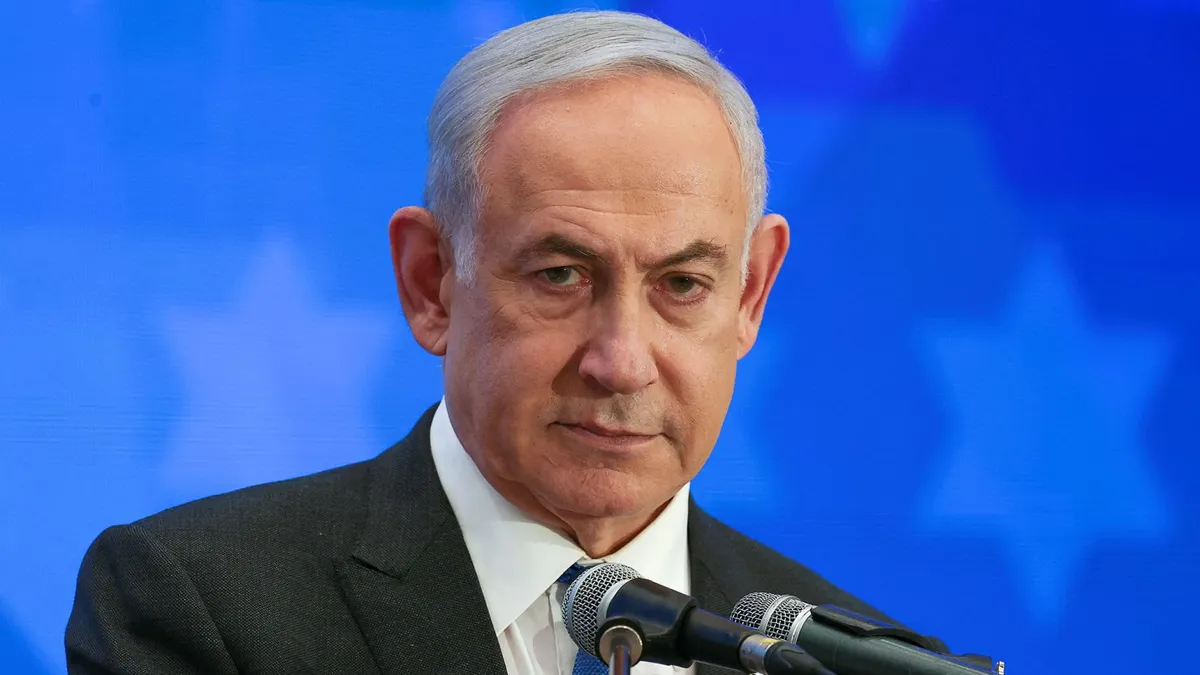
“Before the war, Bibi really sold it to the president as being easy, as regime change being a lot likelier than it was,” a US source remarked, reflecting on the complexities of the ongoing conflict between Israel and Iran.
As tensions escalate, Israeli Prime Minister Benjamin Netanyahu has urged former President Donald Trump against pursuing a ceasefire with Iran, citing significant strategic risks. This comes in the wake of US-Israeli strikes on Iran that began on February 28, 2026, resulting in at least 1,340 reported fatalities, including the death of Iran’s Supreme Leader Ali Khamenei.
Netanyahu and Trump have both expressed a shared goal: to end Iran’s nuclear ambitions and dismantle its ballistic missile capabilities. However, Trump’s recent comments suggest a potential openness to a ceasefire if Tehran complies with US demands, including the surrender of enriched uranium.
Netanyahu, often described as a self-styled expert on Iran, has been vocal about the need for decisive action. He stated, “We are continuing to crush Iran’s regime of terror,” reinforcing his commitment to military engagement.
Historically, this conflict is part of Israel’s ongoing military engagements in the region, particularly following the October 7, 2023, attack by Hamas, which has shaped the current geopolitical landscape.
Despite Netanyahu’s promises of a swift regime change in Iran, the anticipated outcomes have not materialized as expected. Emmanuel Macron has cautioned that “a targeted military action, even for a few weeks, will not allow us to resolve the nuclear issue in the long term,” highlighting the complexities involved.
Public sentiment in Israel appears divided, with a significant percentage of Jewish voters opposing military action against Iran. Recent polls indicate that 60% of Jewish voters believe military action weakens the US, and for the first time since 2001, Americans are reportedly more sympathetic to Palestinians than Israelis.
Details remain unconfirmed regarding the exact dynamics of influence and persuasion between Netanyahu and Trump, as well as the long-term consequences of the conflict on Israel’s diplomatic relations and US military assistance.
As the situation develops, both leaders are expected to navigate these complex challenges, balancing military objectives with international diplomatic pressures.
