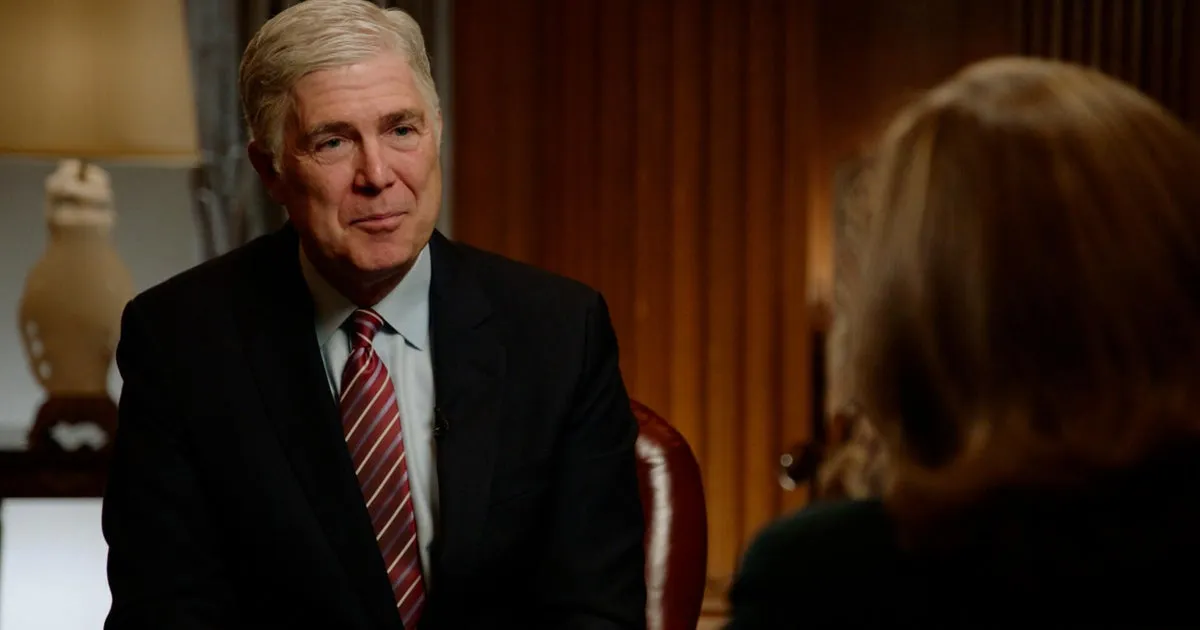
Justice Neil Gorsuch has taken a unique step by co-authoring a children’s book titled ‘Heroes of 1776: The Story of the Declaration of Independence.’ This initiative responds to a troubling trend: the decline in civic knowledge among American students. Recent statistics reveal that only 13% of eighth graders are proficient in American history, highlighting a significant gap in civic education.
This new book aims to teach young readers about the Declaration of Independence and the foundational ideals of the nation. Gorsuch emphasized that understanding these principles is crucial for fostering informed citizenship. He stated, “One thing we could all agree on is the importance of learning American history.” This sentiment resonates deeply in today’s polarized political climate.
That context matters because Gorsuch’s commitment to independent judges has been tested in recent years, particularly during the Trump administration. He firmly believes that judges must remain free from political influence—a stance he reiterated by stating, “My loyalty is to the Constitution, the laws of the United States.” His perspective underscores a fundamental principle of democracy: an impartial judiciary.
The Supreme Court has faced scrutiny from both sides of the political spectrum, especially regarding rulings related to tariffs and voting rights. Since joining the court in 2017 at age 49, Gorsuch has navigated these challenges while advocating for judicial independence. He argues that the structure of the federal judiciary, as laid out in the Constitution, works effectively when upheld.
Gorsuch’s book not only serves as an educational tool but also as a rallying cry for civic engagement. With only 22% of eighth graders proficient in civics, he aims to inspire a new generation to appreciate their rights and responsibilities as citizens. At its heart, this initiative reflects his belief that ordinary people can do extraordinary things—much like those who fought for independence.
As educators and parents seek ways to enhance civic education, Gorsuch’s work may provide valuable resources. Observers note that fostering a deeper understanding of American history could lead to greater political engagement among youth. The hope is that by instilling these values early, future generations will be better prepared to uphold democracy.
Looking ahead, it will be interesting to see how this book impacts discussions around civic education in schools across the country. With civic knowledge at such low levels, initiatives like Gorsuch’s could play a pivotal role in reversing this trend.
