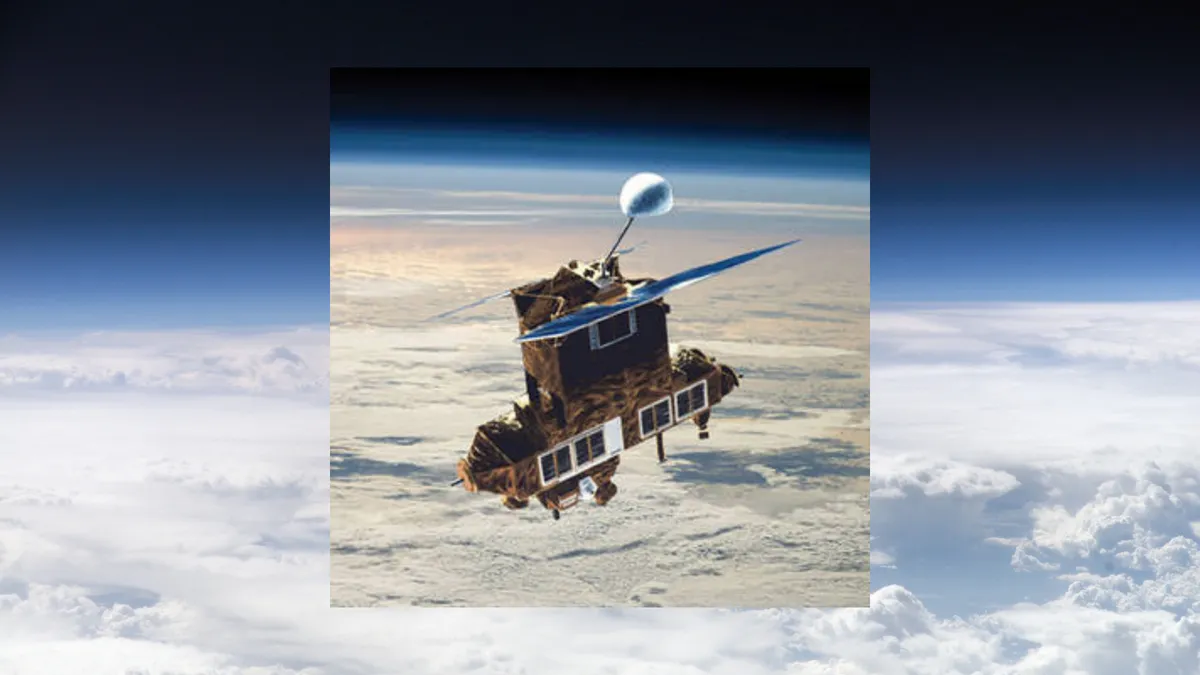
Background on the Van Allen Probes
The Van Allen Probe A and its twin, Van Allen Probe B, were launched to study the radiation belts around Earth. These satellites were designed to investigate the Van Allen radiation belt, a region filled with charged particles that can affect satellite operations and communications. Launched on August 30, 2012, the Van Allen Probe A operated successfully for several years, gathering valuable data until its mission officially ended in 2019 when it ran out of fuel.
Upcoming Re-Entry of Van Allen Probe A
Parts of the Van Allen Probe A are expected to crash to Earth on Tuesday evening, March 10, 2026, at approximately 7:45 p.m. ET, with a possible variation of 24 hours. The spacecraft weighs around 1,323 lb (600 kg) and is descending in an elliptical orbit, set to hit the atmosphere at speeds of about 17,000 miles per hour. While most of the craft is anticipated to burn up upon re-entry, some components may survive the descent.
Risk Assessment and Monitoring
NASA and the US Space Force are closely monitoring the re-entry of the satellite and will provide updates as the event approaches. The risk of damage on the ground is considered extremely low, with estimates suggesting a chance of debris harming a person at about 1 in 4,200. Mark Matney, a NASA official, noted, “The odds that you will be hit are one in several trillion, so quite low for any particular person.” The overall chance of anyone being hurt by falling debris is estimated at 1 in 3,200, according to a 2011 report.
Historical Context of Space Debris
Debris falling from space is not uncommon, with an estimated 5,400 tons of materials surviving re-entry over the past 40 years. Despite the risks, only one person is known to have been struck by falling manufactured space debris; Lottie Williams experienced this rare occurrence. As space exploration continues to evolve, the management of space debris remains a critical concern for agencies like NASA.
Expert Opinions on the Event
Experts have weighed in on the upcoming re-entry of the Van Allen Probe A. Nelofar Mosavi, a researcher involved in the mission, remarked, “This mission … broke all the records for a spacecraft to tolerate and operate in that hazardous region, all with no interruptions.” Jonathan McDowell, an astrophysicist, added, “For the average person, it will be a nice light in the sky if you get lucky and, otherwise, don’t worry about it.” These statements reflect the scientific community’s understanding of the satellite’s impact and the public’s safety.
Uncertainties Surrounding Re-Entry
Details remain unconfirmed regarding the exact location of the satellite’s re-entry into Earth’s atmosphere and where any surviving fragments might land. The unpredictability of such events is a common challenge in space operations, highlighting the complexities involved in tracking and managing space debris.
As the re-entry of the Van Allen Probe A approaches, NASA and the US Space Force continue to monitor the situation closely, ensuring public safety remains a priority. The event serves as a reminder of the ongoing challenges and achievements in space exploration and the importance of understanding the implications of space debris.
