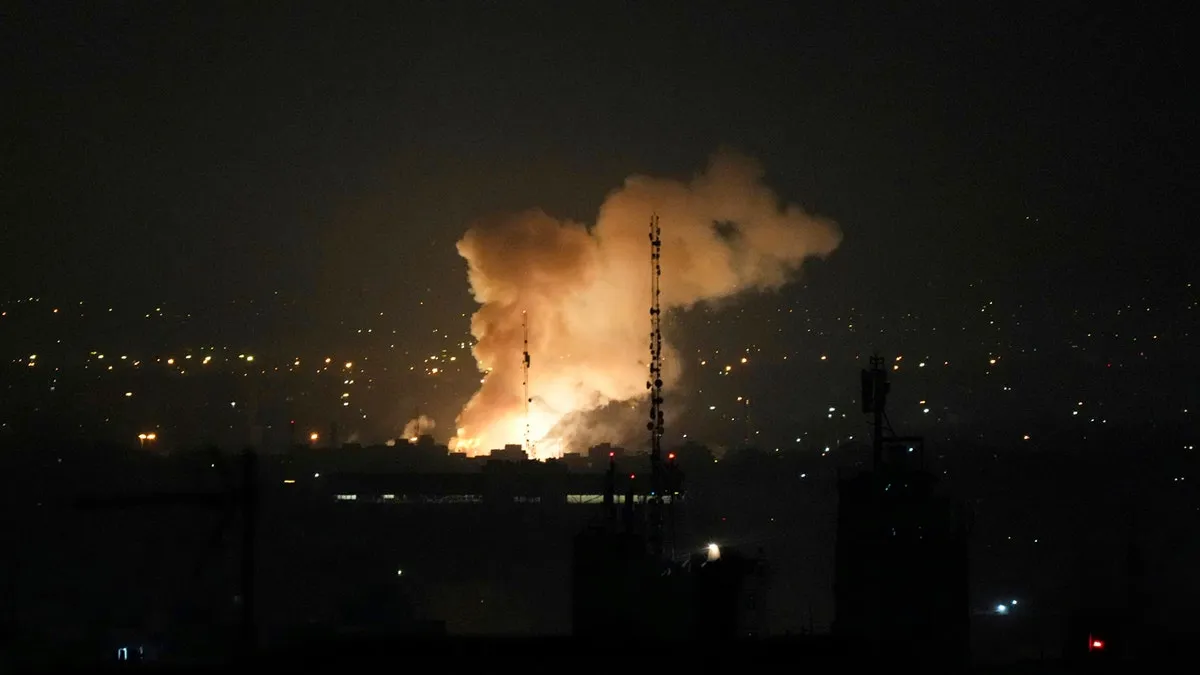
The recent Iran strikes have led to significant civilian casualties and extensive damage to infrastructure, marking a critical escalation in regional tensions. Reports indicate that Israel and the United States have launched extensive strikes across Iran, targeting key infrastructure in Tehran and other cities.
In response to the US-Israeli drone activity, Iranian air defense systems were activated, yet the effectiveness of these systems remains unconfirmed. Israeli forces have targeted various sites, including military installations, hospitals, schools, and residential units. Tragically, at least six people were killed in strikes on homes in Tabriz city, and Iran’s Fars news agency reported that strikes in Khorramabad killed one child and wounded several others.
According to the Iranian Red Crescent Society, more than 80,000 civilian building units have been hit, with 5,000 residential units destroyed. The death toll in Iran has surpassed 1,500, while in Israel, 15 people have been killed by Iranian attacks. This ongoing conflict has raised concerns about the humanitarian impact on civilians caught in the crossfire.
Iran’s Islamic Revolutionary Guard Corps (IRGC) has threatened retaliation against US bases if Iranian power plants are attacked. The US military has targeted a turbine engine production site in Qom province linked to the IRGC, further escalating the situation. Iranian missile strikes have continued, with shrapnel reported across southern and central Israel.
As tensions rise, Iran’s Defence Council has warned that any attack on Iranian coasts would lead to the mining of Gulf routes, potentially disrupting international shipping. Mohamad Elmasry stated, “We risk entering into a new chapter,” highlighting the precarious nature of the current situation.
Details remain unconfirmed regarding the exact number of casualties and damage from the strikes. The international community watches closely as the situation develops, with concerns about the potential for broader conflict and the implications for regional stability.
