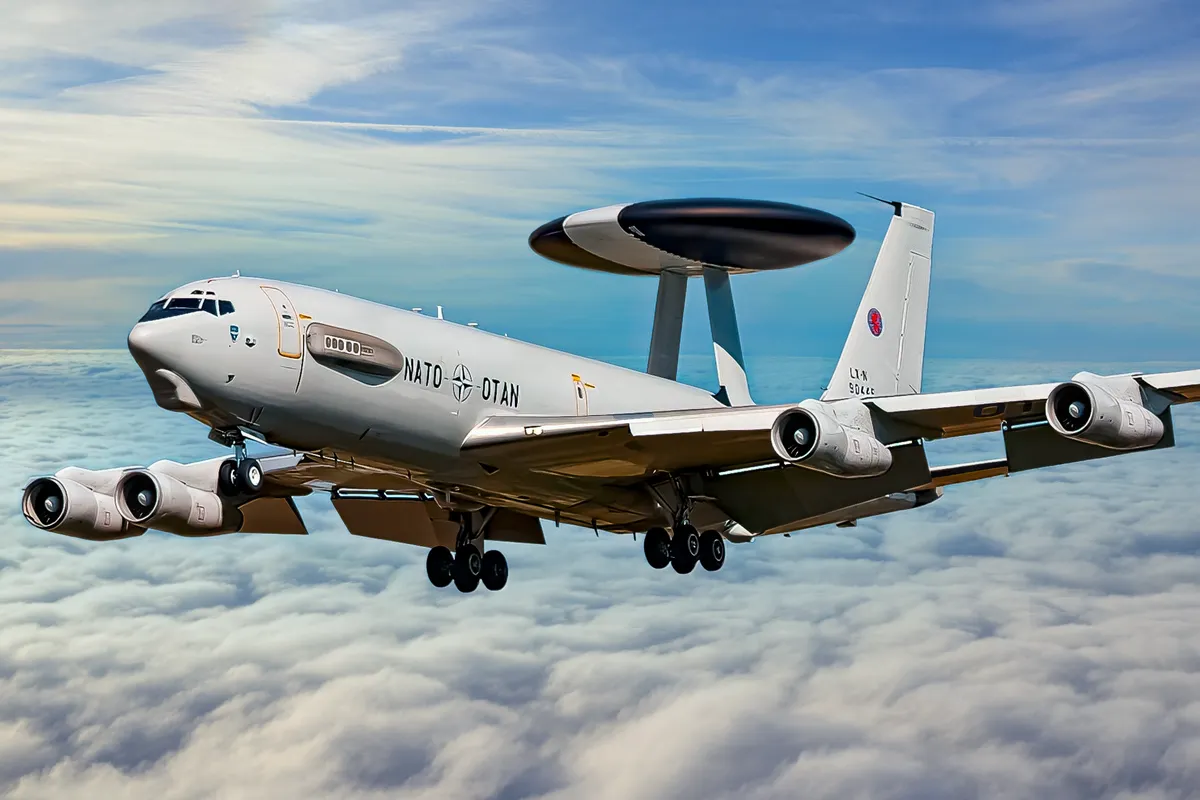
In a significant escalation of tensions, an Iranian strike on March 30, 2026, resulted in the destruction of an E-3 Sentry AWACS aircraft at Prince Sultan Air Base in Saudi Arabia. This incident marks a critical moment in the ongoing military confrontations in the region, highlighting the vulnerabilities of U.S. forces.
The E-3 Sentry, an airborne warning and control system (AWACS), was one of 16 such aircraft in the U.S. fleet prior to the attack. Capable of tracking around 600 targets simultaneously and monitoring an expansive 120,000 square miles of battlespace, the loss of this aircraft is expected to severely impact U.S. surveillance capabilities.
Historically, the U.S. fleet of E-3s has dwindled from 32 aircraft in 2015 to just 17 at the beginning of 2026, raising concerns about the effectiveness of U.S. air defense systems. The first E-3 aircraft joined the Air Force fleet in 1978, and their gradual retirement has prompted discussions about potential replacements, although the Pentagon has yet to finalize a new platform.
Experts have voiced their concerns regarding the implications of this strike. Andreas Krieg noted, “Iran is gradually eating away at the network of early warning systems that the U.S. has built over decades in the region.” Similarly, Cedric Leighton remarked, “The loss of the AWACS is a serious blow to (U.S.) surveillance capabilities.”
Daniel Davis expressed a more dire sentiment, stating, “We’re not doing OK at all,” emphasizing the precarious situation U.S. forces find themselves in following this attack. Kelly Grieco added, “Iran’s going after the radars that detect threats, the tankers that keep jets flying, and the AWACS that direct the battle,” underscoring the strategic nature of Iran’s military actions.
Details remain unconfirmed regarding whether any Oklahoma-based crews were present during the attack, as well as the extent of damage to U.S. forces and assets in the region. The situation continues to evolve, with potential ramifications for U.S. military strategy in the Middle East.
