Introduction
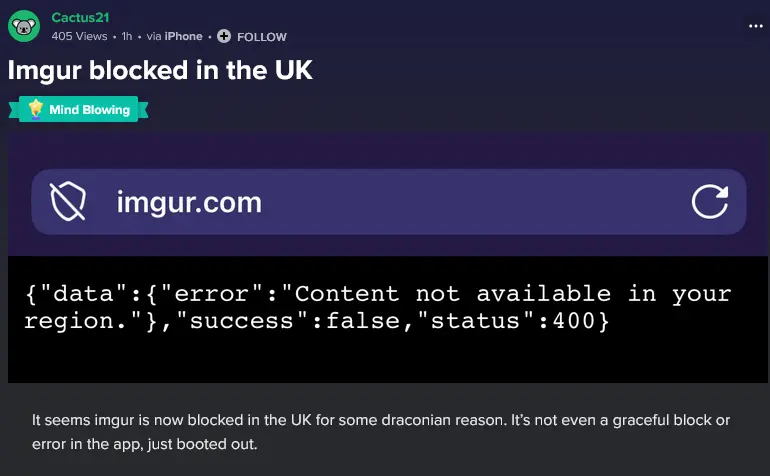
Imgur, a well-known image hosting and sharing platform, has recently faced significant accessibility issues in the United Kingdom. Its blocking has raised eyebrows among users, both casual and professional, since the platform is widely used for sharing images, memes, and GIFs. This situation not only impacts everyday internet users but also affects businesses and creators relying on Imgur for visual content distribution.
Details of the Blockage
The blocking of Imgur in the UK surfaced in late October 2023, following reports that users were unable to access the site through various internet service providers (ISPs). While initial assumptions suggested the blockage may have resulted from technical issues or server problems, further investigations revealed that the UK government had issued a directive to restrict access to certain digital platforms associated with copyright infringement concerns.
This move has sparked considerable debate among internet freedom advocates and users alike, as Imgur is often at the forefront of user-generated content sharing. Many are questioning the implications this blockade might have on internet censorship in the UK and whether it serves as a precursor for similar actions against other popular sites.
Reactions from Users and Creators
The response from the online community has been swift, with social media platforms buzzing with discussions regarding the reasons behind the blockage. Many users expressed their frustration, particularly those who depend on Imgur for showcasing artwork, photography, and humorous content that drives engagement on other platforms like Reddit and Twitter.
Additionally, small businesses that utilise Imgur for marketing and audience engagement have also been adversely affected. Some creators have started to explore alternatives, seeking other platforms for image hosting, which may damage user loyalty and overall trust in the UK’s digital landscape.
Conclusion
The ongoing Imgur blockade in the UK serves as a critical reminder of the delicate balance between copyright concerns and internet freedom. While the government’s stance is rooted in protecting intellectual property rights, it raises significant questions about accessibility and the future of digital expression. Users and advocates call for clear communication from authorities, urging a reconsideration of such sweeping restrictions that diminish online creativity and collaboration. The outcome of this situation may lead to a broader discourse on internet regulations and user rights in the UK, influencing the landscape for users and businesses well into the future.
