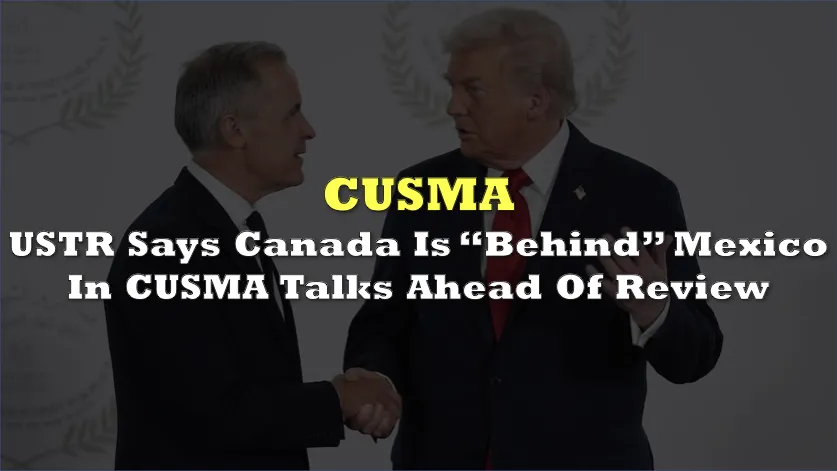
“We’re having talks separately with Canada, but we’ve moved along with Mexico. Canada is behind on this with Mexico.” This statement from Jamieson Greer, a key figure in the ongoing CUSMA review, underscores the current dynamics in trade negotiations between the United States, Canada, and Mexico. As discussions unfold, it is clear that Mexico has established a more defined review track with Washington compared to its northern neighbor.
On March 5, the U.S. and Mexico formally launched bilateral discussions in preparation for the joint review of the Canada-United States-Mexico Agreement (CUSMA). These talks are crucial as they set the stage for future trade relations and adjustments to the agreement, which runs through 2036 but necessitates periodic reviews. Greer’s comments highlight the urgency and importance of these negotiations, particularly as they relate to market access and trade barriers.
Earlier this month, Greer met with Canada-U.S. Trade Minister Dominic LeBlanc in Washington. LeBlanc expressed optimism about the renewal of CUSMA, suggesting that targeted changes could be on the horizon rather than a complete renegotiation of the agreement. This sentiment reflects a broader hope that both countries can navigate their differences and find common ground in the evolving trade landscape.
Despite the optimism, Canada faces significant challenges. Greer noted that Canada remains subject to U.S. tariffs on steel, aluminum, autos, lumber, and cabinets, despite the CUSMA-exempt status. These tariffs have created friction in the trade relationship and serve as a reminder of the complexities involved in the negotiations. Greer has also pointed out that certain domestic measures in Canada are acting as impediments to bilateral talks, complicating the path forward.
In contrast, the U.S. and Mexico are focusing on tightening rules of origin, which Greer has framed as a necessary step to prevent Mexico from becoming a transshipment hub for goods originating in other markets. This focus on rules of origin is indicative of the U.S. administration’s desire to ensure that trade benefits are realized within the intended framework of CUSMA.
The backdrop of these negotiations is marked by the lingering effects of the Trump administration’s investigations under Section 301 of the Trade Act of 1974 into Canada. These investigations have added a layer of tension to the relationship, with officials describing the wider bilateral relationship as upended by tariffs and territorial threats. This historical context makes Greer’s assertion about Mexico’s progress particularly significant.
What observers say
As the negotiations continue, the differing trajectories of Canada and Mexico in the CUSMA review process will be closely monitored. LeBlanc’s cautious optimism and Greer’s acknowledgment of the challenges ahead suggest that while progress is being made, significant work remains to be done. If the countries do not agree to extend CUSMA, they will enter annual reviews, and any member can leave with six months’ notice, adding further urgency to the discussions.
In summary, the current state of CUSMA negotiations reflects a complex interplay of optimism and challenges. As Greer pointed out, Mexico is currently ahead in discussions, but the outcome will ultimately depend on the ability of both Canada and the U.S. to address existing barriers and find mutually beneficial solutions. Details remain unconfirmed regarding the next steps, but the focus on market access and trade rules will likely remain at the forefront of future discussions.
