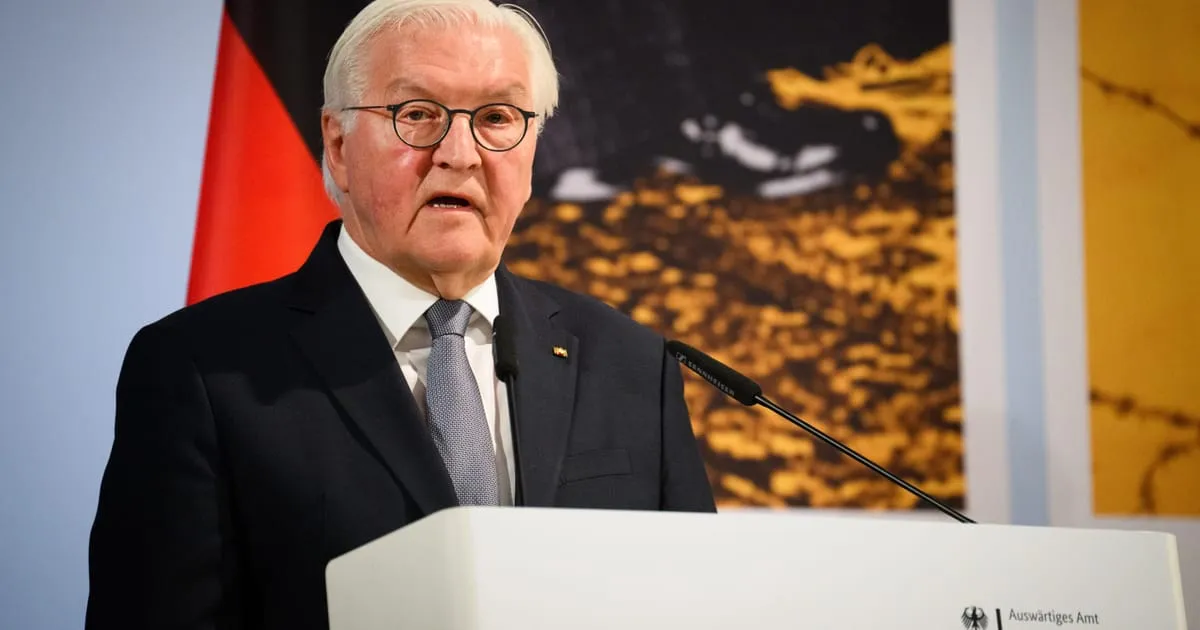
Before the recent developments, expectations surrounding Germany’s foreign policy were largely characterized by a strong alignment with U.S. interests, particularly under the previous administration. However, a decisive moment occurred on March 24, 2026, when German President Frank-Walter Steinmeier publicly criticized the Iran war, labeling it a “disastrous mistake” and a violation of international law.
Steinmeier, who previously served as Germany’s foreign minister and played a role in negotiating the nuclear deal with Iran, emphasized that the conflict was politically avoidable. His remarks signal a significant shift in Germany’s approach to international relations, particularly in the context of its relationship with the United States.
The immediate effects of Steinmeier’s criticism are profound. He urged Germany to become more independent from U.S. influence in defense and technology, a call that resonates with a growing sentiment within Germany regarding its role in global affairs. Steinmeier’s position, largely ceremonial, allows him the freedom to express these views without the constraints faced by other politicians.
In his statements, Steinmeier drew a parallel between the current transatlantic rift and Germany’s historical separation from Russia following the invasion of Ukraine in 2022. He asserted, “Just as I believe there will be no going back in relations with Russia to before February 24, 2022, so too do I believe there will be no going back in transatlantic relations to before January 20, 2025.” This comparison highlights the depth of the current geopolitical shifts.
Steinmeier’s comments also reflect a broader domestic debate in Germany regarding its stance on the Iran war and its relationship with the U.S. He pointed out that the current U.S. administration operates under a different worldview that often disregards established international norms and partnerships. This perspective raises questions about the future of U.S.-Germany relations.
Trade figures further illustrate this changing dynamic; in the first eight months of 2025, trade between the U.S. and Germany amounted to more than 163 billion euros ($190 billion). However, China has now overtaken the U.S. as Germany’s top trading partner, indicating a potential pivot in economic alliances.
Steinmeier also called for the creation of alternatives to U.S.-dominated technology in Europe, emphasizing the need for Germany to strengthen its own technological capabilities. His vision for Germany’s military is that it must become the backbone of conventional defense in Europe, a significant shift from previous reliance on U.S. military support.
As the situation evolves, Steinmeier’s remarks serve as a critical reminder of the complexities in international relations and the necessity for Germany to navigate its path amid shifting global alliances. The rupture in transatlantic relations, as he noted, is too deep to ignore, and the implications of his statements will likely resonate in the years to come.
