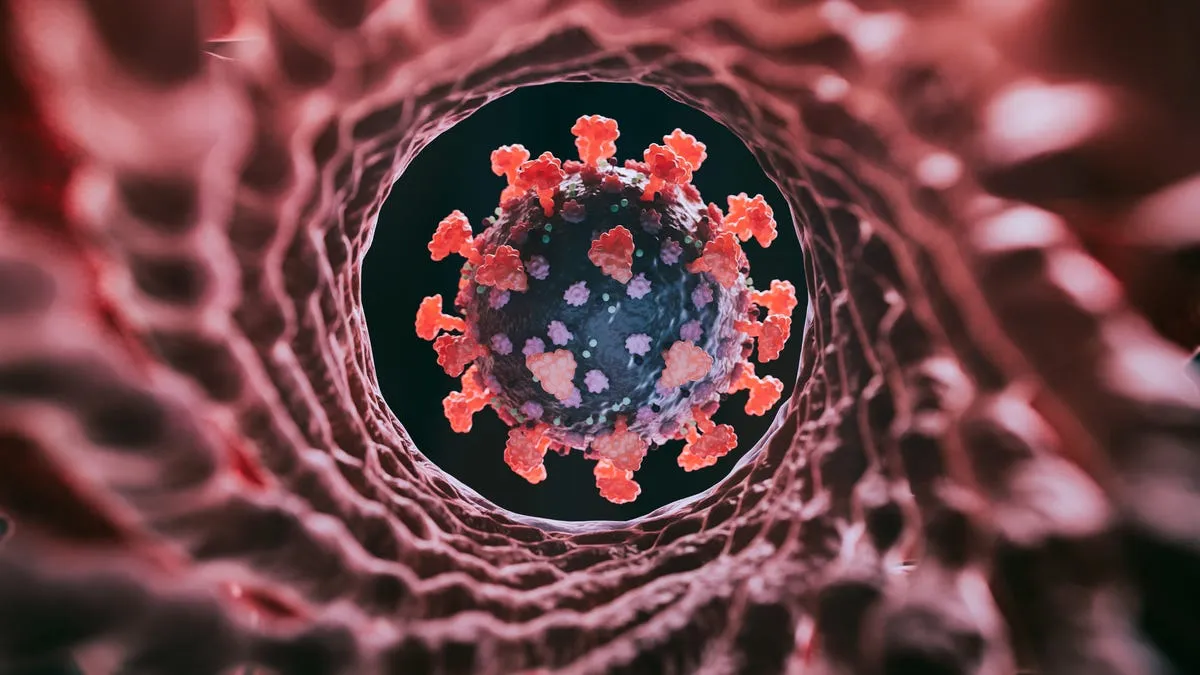
The COVID variant BA.3.2, referred to as Cicada, is currently causing a notable rise in cases both in the United States and globally. This variant, which is classified as ‘highly mutated’ with 70-75 mutations, was first detected in a traveler arriving in the U.S. in June 2025. The first confirmed case in a U.S. patient was diagnosed in January 2026.
As of mid-March 2026, BA.3.2 has been reported in at least 23 countries and accounts for approximately 30% of COVID-19 sequences in Germany and some Northern European nations. In the U.S., it has spread to at least 25 states, indicating a significant and rapid dissemination.
Monitoring the spread of BA.3.2 is critical, as the CDC notes that it provides valuable insights into the potential for this new SARS-CoV-2 lineage to evade immunity from prior infections or vaccinations. The variant has also been detected in 3.7% of wastewater samples, further underscoring its presence in communities.
Despite the alarming statistics, experts like Andrew Pekosz, Ph.D., suggest that while BA.3.2 appears concerning on paper, it has not yet led to a significant increase in severe disease in most areas. However, Dr. Robert H. Hopkins, Jr. warns that low vaccination rates and insufficient public health efforts leave populations vulnerable to potential outbreaks.
Current COVID vaccines are expected to continue offering protection against severe disease caused by BA.3.2, but the effectiveness of these vaccines against the variant is still under investigation. Symptoms associated with Cicada are similar to those of other COVID-19 infections, which complicates the identification of cases.
Details remain unconfirmed regarding the potential for BA.3.2 to cause a surge in the U.S. As health officials continue to monitor the situation, further developments are anticipated regarding the variant’s impact and the ongoing effectiveness of vaccines.
