The wider picture
The planned expansion of Medical Assistance in Dying (MAiD) to include individuals whose sole underlying condition is mental illness has sparked considerable debate across Canada. This expansion is set to take effect on March 17, 2027, and has drawn organized opposition from various groups, including the Archdiocese of Toronto and the Euthanasia Prevention Coalition. These organizations argue that allowing MAiD for mental illness could lead to dire consequences for vulnerable individuals.
In response to this looming change, Bill C-218, also known as the Right to Recover Act, has been introduced to prohibit MAiD where mental illness is the only condition. This bill aims to ensure that those struggling with severe mental health challenges receive the treatment, compassion, and support they need rather than being offered a pathway to end their lives. Tamara Jansen, a key supporter of the bill, stated that this represents “a line that should never be crossed.”
Danielle Smith, the Premier of Alberta, has also voiced her concerns, emphasizing the need for compassion and support for those in distress. “Those struggling with severe mental health challenges need treatment, compassion and support, not a path to end their life at what may be their lowest moment,” she remarked. This sentiment reflects a growing concern among healthcare professionals and advocates about the implications of expanding MAiD to include mental illness.
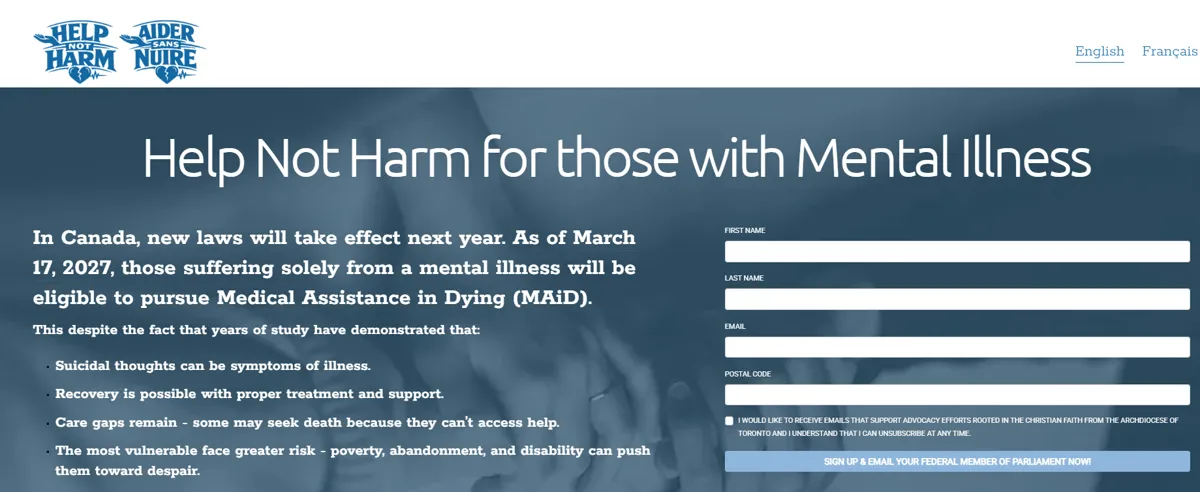
The Archdiocese of Toronto has launched the Help Not Harm campaign, encouraging Catholics and the broader community to support Bill C-218. Neil MacCarthy, a spokesperson for the Archdiocese, welcomed the solidarity shown by dioceses across Canada in this effort. The campaign aims to raise awareness about the potential risks associated with the expansion of MAiD and to advocate for the protection of vulnerable individuals.
In Alberta, Bill 18, the Safeguards for Last Resort Termination of Life Act, has been introduced to bar assisted suicide for individuals with mental illness as their sole underlying condition. This legislative move aligns with the growing pushback against the federal government’s plans to expand MAiD. The introduction of such bills indicates a significant shift in the conversation around assisted dying and mental health in Canada.
As the debate continues, observers are keenly watching how these legislative efforts will unfold. The discussions surrounding Bill C-12 and its implications for mental health and MAiD are expected to intensify as the scheduled expansion date approaches. With various stakeholders weighing in, the outcome remains uncertain, and details remain unconfirmed.
In the broader context, the conversation about mental health and assisted dying is becoming increasingly relevant. The implications of these legislative changes could have lasting effects on how society views mental health treatment and the rights of individuals facing severe mental health challenges. As Canada navigates this complex issue, the voices of advocates, healthcare professionals, and lawmakers will play a crucial role in shaping the future of MAiD and mental health policy.
