What the data shows
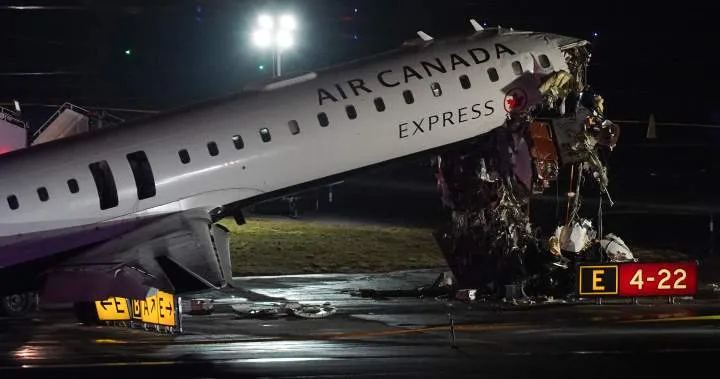
The recent crash involving an Air Canada plane at LaGuardia Airport raises critical questions about aviation safety and emergency response protocols. On Sunday night around 11:30 p.m., an Air Canada Express CRJ-900, operated by Jazz Aviation, collided with a fire truck while carrying 76 individuals, including 72 passengers and four crew members. Tragically, the incident resulted in the deaths of both pilots, the captain and first officer, while 41 other individuals were transported to two hospitals in Queens, with nine remaining in care, some in serious condition.
This incident occurred as the fire truck was responding to a separate emergency involving a United Airlines flight. Initial reports indicate that the fire truck had been cleared to cross the runway before the collision, as confirmed by air traffic audio recordings. However, the circumstances surrounding the crash remain under investigation by the National Transportation Safety Board (NTSB), with assistance from the Transportation Safety Board of Canada (TSB).
Transport Minister Steven MacKinnon stated, “Canada is searching for answers,” highlighting the urgency of understanding the factors that led to this tragic event. The U.S. Federal Aviation Administration (FAA) grounded all planes at LaGuardia Airport following the crash, emphasizing the seriousness of the situation and the need for thorough investigations.
Prime Minister Mark Carney expressed his condolences, calling the incident “deeply saddening.” The crash has raised concerns about the safety protocols in place at busy airports like LaGuardia, which is known for its significant air and ground traffic. Harvey Scolnick, an aviation expert, remarked, “This kind of thing doesn’t happen very often,” underscoring the rarity of such incidents in modern aviation.
As investigations continue, details remain unconfirmed regarding the exact cause of the crash and the staffing levels of air traffic controllers at the time. The NTSB is expected to release findings in the coming weeks, but for now, the aviation community and the families affected by this tragedy await answers.
In the wake of the crash, both Air Canada and Jazz Aviation have expressed their condolences and are cooperating fully with the investigation. The deployment of a Canadian investigation team to support the NTSB underscores the international implications of this incident and the shared commitment to aviation safety.
As the investigation unfolds, the focus will be on understanding the events leading up to the collision and ensuring that measures are put in place to prevent such tragedies in the future. The aviation industry is under scrutiny, and the outcomes of this investigation could lead to significant changes in operational protocols and safety regulations.
