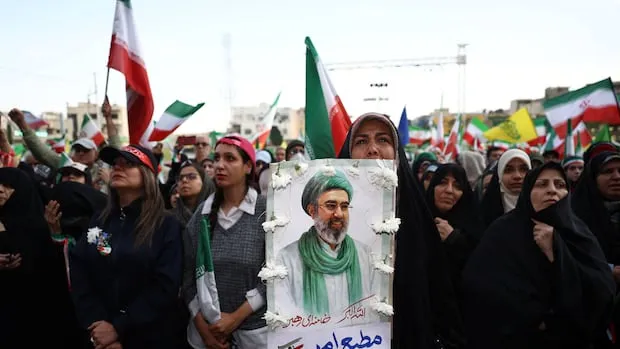
In a bold statement, Iran’s Supreme Leader Mojtaba Khamenei has vowed to maintain control over the Strait of Hormuz, a critical passage for global oil shipments, amid rising tensions with the U.S. This declaration comes as the U.S. prepares military options in response to ongoing conflicts.
The immediate context reveals that the Strait of Hormuz remains closed, choking off approximately 20% of the world’s oil and gas supplies. Global energy prices have surged, with Brent crude hitting over $126 per barrel. The situation escalates as Iran threatens ‘long and painful strikes’ on U.S. positions if further attacks occur.
That context matters because it highlights not only regional instability but also potential global economic repercussions. The ongoing U.S. naval blockade has severely restricted Iran’s oil exports, putting additional pressure on an already strained economy.
The backdrop of this conflict includes a complex history, beginning with U.S.-Israeli strikes on Iranian targets that have heightened tensions significantly. Iran’s nuclear program continues to be a focal point, with reports indicating that its stockpile includes about 440 kg of uranium enriched to 60%.
This situation is prompting reactions from various leaders worldwide. Khamenei stated, ‘Foreigners who come from thousands of kilometres away … have no place there except at the bottom of its waters.’ Meanwhile, U.S. President Donald Trump remarked, ‘Iran can’t get their act together. They don’t know how to sign a nonnuclear deal.’ Such statements underline the deepening divide between these nations.
As military briefings continue in Washington, officials remain vigilant about potential escalation. Masoud Pezeshkian warned that any attempt to impose a maritime blockade is contrary to international law and is ‘doomed to fail.’
The Pentagon estimates that the cost of the ongoing war with Iran is nearing $25 billion. This financial burden adds another layer of complexity to an already fraught situation.
The longer this vital artery is choked, as noted by António Guterres, ‘the harder it will be to reverse the damage.’ With both sides entrenched in their positions, the path forward appears increasingly uncertain.
