Introduction
The share price of LVMH Moët Hennessy Louis Vuitton, the world’s leading luxury goods conglomerate, has become a focal point for investors and analysts alike. As a bellwether for the luxury sector, movements in LVMH’s stock price not only reflect the company’s financial health but also broader economic trends. Recent fluctuations in LVMH’s share price are indicative of evolving consumer behaviours, supply chain challenges, and shifts in market sentiment, making it a topic of significant importance.
Main Body
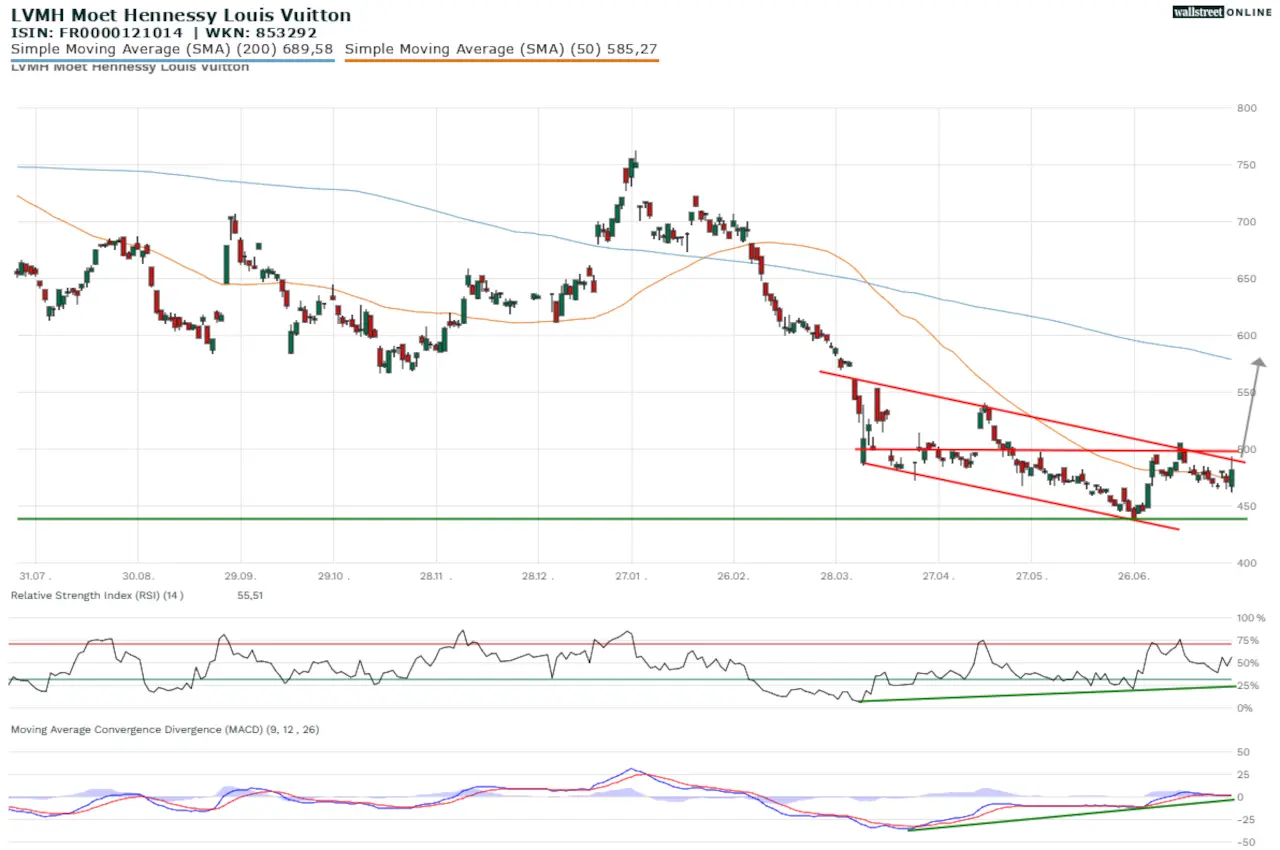
As of October 2023, LVMH shares have experienced both surges and dips, mirroring global economic conditions and the luxury market’s resilience post-pandemic. Following a strong performance in the first half of the year—reporting a 23% increase in revenue compared to the previous year—investors were initially optimistic, with shares peaking at €870 in August. However, a subsequent earnings report highlighted challenges due to rising costs and a slowdown in Chinese consumer spending, resulting in a decline in share price in September.
Analysts suggest that the fluctuations in the LVMH share price are closely tied to consumer sentiment, particularly in major markets like China and the United States. While the luxury sector generally shows resilience, factors such as inflation, geopolitical tensions, and shifting consumer priorities can create volatility. For instance, despite reporting strong sales, concerns over the slowing growth in China—one of LVMH’s largest markets—led to a retraction in share prices, dropping as low as €805 by late September.
Morgan Stanley recently reiterated a positive outlook for LVMH, suggesting that the company’s robust brand portfolio and operational efficiency could enable it to navigate these challenges effectively. They projected that continued premiumisation trends might sustain demand for luxury goods, hinting that LVMH could see a rebound in share price if consumer spending stabilises and global economic conditions improve.
Conclusion
The LVMH share price is not just a reflection of the company’s performance; it serves as a barometer for the luxury goods sector in a turbulent global economy. As LVMH continues to navigate the highs and lows prompted by macroeconomic factors and consumer behaviour, investors must remain vigilant. While challenges persist, the long-term outlook appears promising, bolstered by LVMH’s strong brand equity and potential for renewed demand. Future trends in the luxury market, particularly in China, will be pivotal in shaping the trajectory of LVMH’s share price moving forward.
