Introduction
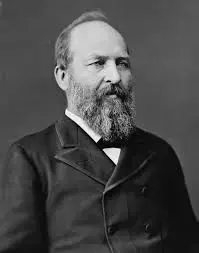
James Garfield, the 20th President of the United States, served in office for a brief time before his tragic assassination. Despite his short presidency, Garfield’s life story and contributions offer significant insights into the political landscape of 19th-century America. His relevance in today’s discussions on leadership and political reform remains noteworthy.
Early Life and Education
Born on November 19, 1831, in Moreland Hills, Ohio, Garfield faced numerous challenges in his early life. He was raised in a poor family, and his father died when he was just two years old. Despite these hardships, Garfield’s determination led him to graduate from Williams College in Massachusetts in 1856. He later became a teacher and a preacher, showcasing his diverse skill set and commitment to education.
Political Career
Garfield’s political career began in earnest during the Civil War, where he served as a major general in the Union Army. His leadership during pivotal battles earned him respect and a strong political following. He was elected to the U.S. House of Representatives in 1863, where he served for nearly two decades. Garfield was known for his advocacy for civil rights and for his opposition to the expansion of slavery, positioning himself as a forward-thinking politician of his time.
Presidency and Assassination
In 1880, Garfield was nominated as the Republican candidate for President and won a contentious election. His presidency began on March 4, 1881, but just a few months later, on July 2, he was shot by Charles Guiteau, a disgruntled office seeker. Garfield survived the initial attack but succumbed to his injuries on September 19, 1881, marking a tragic end to his presidency and sparking nationwide discussions on the need for civil service reform.
Legacy and Significance
Despite his brief time in the White House, Garfield’s impact on American politics was significant. His assassination led to the Pendleton Civil Service Reform Act of 1883, which aimed to eliminate the patronage system in government jobs. Garfield is remembered not only for his tragic story but also for his belief in education and the importance of a government that served its people fairly.
Conclusion
James Garfield’s life serves as a poignant reminder of the complexities of political leadership. His dedication to public service and reform continues to resonate today. As debates around civil service and political ethics remain relevant, Garfield’s legacy highlights the importance of integrity and accountability in governance. Understanding his journey is vital for future generations navigating the intricacies of political responsibility.
