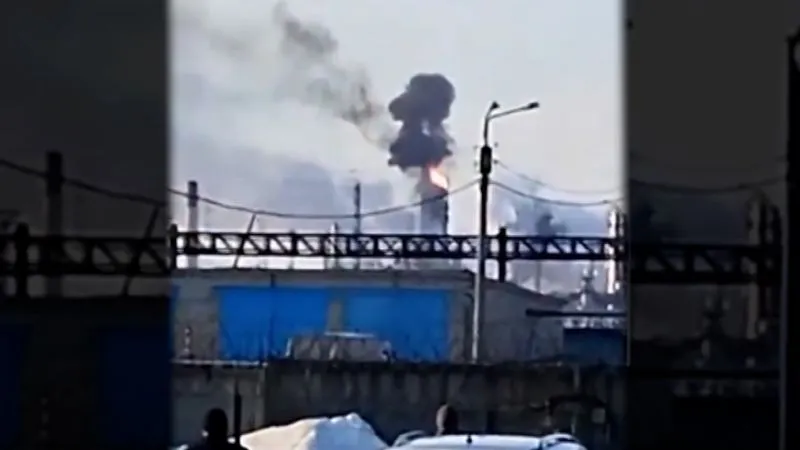
The repeated drone strikes on the Tuapse refinery in Russia have led to alarming environmental damage and public health warnings for local residents. In April 2026, Ukrainian drones struck this oil refinery three times, causing fires and severe contamination.
Key impacts:
- Residents of Tuapse were ordered not to drink tap water following a strike.
- The first strike on April 16 ignited a fire that lasted two days.
- The second strike occurred on April 20, resulting in a fire that lasted five days.
- Emergency workers cleared 12,600 cubic metres of contaminated material from the area.
- A black rain phenomenon covered cars and animals in oil residue.
Such incidents raise crucial questions about safety. How does this affect the community? Authorities have advised residents to limit outdoor activities due to elevated levels of benzene in the air—three times above safe limits. The local health authority has recommended that residents consume only bottled water as a precaution.
At least eight storage tanks at the refinery were destroyed during these attacks, leading to petroleum leaks into the Tuapse River. This situation has been labeled an ecological disaster, with volunteers even setting up animal cleanup centres to assist distressed wildlife affected by oil contamination.
The context is stark: The ongoing conflict between Ukraine and Russia has escalated dramatically since February 2022. As both nations engage in hostilities, civilian areas become increasingly vulnerable to collateral damage.
The situation has led to evacuations after the third drone strike, which raises further concerns about the long-term effects on public health and environmental stability in Tuapse. Yet, what remains uncertain is how authorities will address the extensive damage and restore safety for residents.
