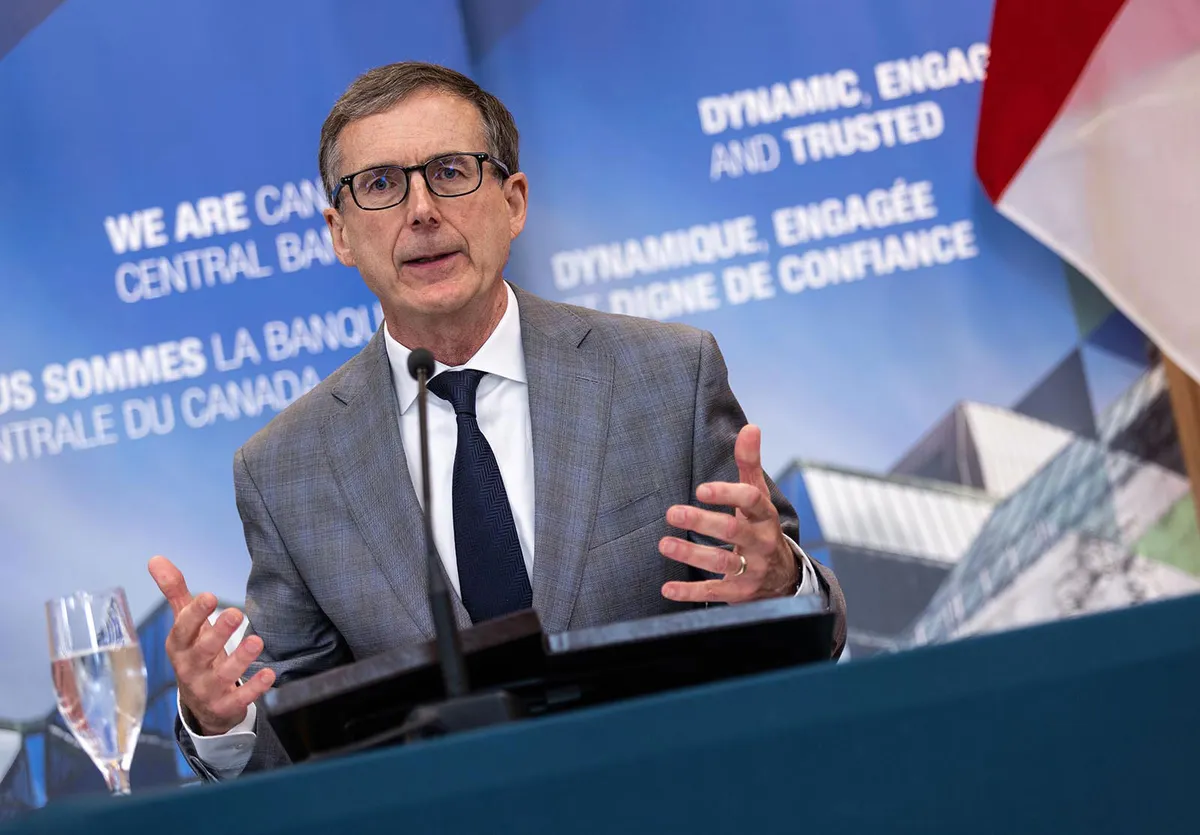
Tiff Macklem, Governor of the Bank of Canada, recently discussed the implications of the Mythos AI model during a meeting with financial leaders. His remarks underscore a growing concern: how will emerging technologies like AI impact financial stability?
At this meeting, Macklem emphasized that, “I don’t think anybody knows the full implications at this point. That’s precisely what everybody’s trying to get to the bottom of.” This uncertainty is particularly troubling for policymakers and financial institutions, which are currently in early discussions about managing these risks.
Moreover, Macklem has engaged directly with U.S. Federal Reserve Chair Jerome Powell regarding the American approach to these challenges. The dialogue reflects a broader international concern over how AI could disrupt markets and institutions.
Context matters because the Mythos model has not yet seen widespread commercial release. However, its disruptive potential has regulators on high alert—especially as they work to understand its long-term implications.
Macklem also pointed out the urgent need for robust cybersecurity measures. Given that AI can expose vulnerabilities in existing systems, he stated, “We’re going to need to come to grips with how we’re going to manage this on an ongoing basis.” This proactive stance highlights a commitment to safeguarding Canadian data and institutions.
The urgency of these discussions is echoed by Evan Solomon, who noted that protecting Canadians is their top priority. He remarked, “Our No. 1 goal is to protect Canadians, Canadian data and our institutions, so we’re very aware of it.” Such statements reinforce the gravity of the situation.
In parallel, Canada’s AI Minister has met with officials from Anthropic to voice concerns about Mythos. These meetings signify that government responses are being formulated as they grapple with new technologies.
François-Philippe Champagne highlighted that Mythos serves as a test case for government preparedness in dealing with technological advancements. It raises an essential question: How ready are governments to manage unforeseen consequences?
As discussions continue among global leaders—including those at the International Monetary Fund—the stakes remain high. Observers expect that concrete strategies will emerge soon but details remain unconfirmed.
