“This was made for the fans, and I think there’s a lot of surprises in there that haven’t been done in Marvel yet,” said Lewis Pullman, reflecting on the excitement surrounding the A-10 Thunderbolt II’s operational capabilities. As of March 15, 2026, the A-10s are actively flying attack missions against insurgent groups aligned with the Iranian government in Iraq.
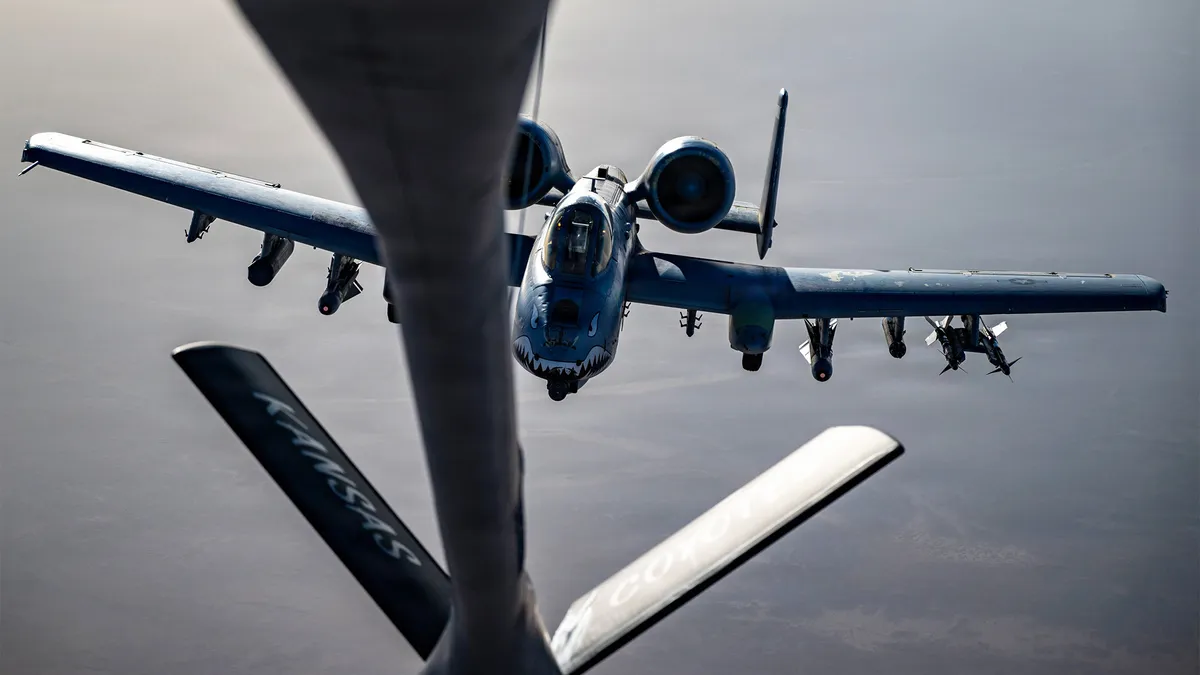
U.S. Central Command has released images showcasing the A-10C Thunderbolt II aircraft, which are equipped with advanced technology including a LITENING targeting pod and AGM-65 Maverick missiles. These aircraft are also armed with AIM-9M Sidewinder missiles and LAU-131 rocket pods featuring APKWS II rockets, enhancing their effectiveness in combat scenarios.
The A-10 Thunderbolt II is known for its ability to loiter for extended periods during missions, allowing for sustained air support. It employs the GAU-8/A Avenger 30 mm rotary cannon, which is a key feature of its combat profile. However, this profile also makes the A-10 vulnerable to mobile air defense systems.
Currently, A-10s are operating from Muwaffaq Salti Air Base in Jordan, where they are being utilized against Iran-aligned militias. Despite their significant role, A-10s are not currently flying missions over Iran itself, and details remain unconfirmed regarding any potential operations in that region.
The A-10’s combat capabilities, including its ability to refuel at altitudes between 15,000 and 22,000 feet at Mach 0.48, continue to demonstrate its value in modern warfare. While the aircraft’s days may be numbered, its effectiveness in combat scenarios remains significant.
As the situation evolves, the U.S. Central Command is expected to provide further updates on the A-10’s operational status and any developments in the ongoing conflict in Iraq. The A-10 Thunderbolt II, with its storied history, continues to play a crucial role in the U.S. military’s efforts in the region.
