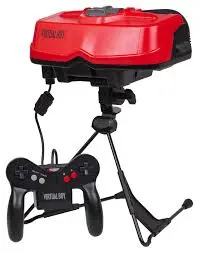
Introduction
The Virtual Boy, released by Nintendo in 1995, marked an ambitious yet ultimately problematic attempt to pioneer 3D gaming technology. As gaming trends continue to evolve, exploring the significance and legacy of the Virtual Boy remains essential for understanding the industry’s past and future direction.
The Launch and Features
Nintendo’s Virtual Boy was introduced as the first portable console capable of delivering true 3D visuals. Equipped with a unique parallax display and a dual-screen design, it aimed to immerse players in a three-dimensional gaming experience. Despite its innovative aspirations, the Virtual Boy quickly faced criticism for its bulky design, monochromatic red visuals, and potential health concerns, including eye strain and discomfort during long play sessions.
Sales and Reception
The Virtual Boy’s launch did not meet Nintendo’s expectations, selling approximately 770,000 units worldwide. It was unable to capture the market’s attention amidst the emerging popularity of 16-bit consoles and the PlayStation. Critics noted that while the technology was groundbreaking, the lack of quality titles and comfort issues overshadowed its potential. Notable games included ‘Wario Land’ and ‘Teleroboxer’, but they failed to drive sufficient interest in the console.
Impact and Legacy
Though the Virtual Boy was ultimately discontinued just a year after its launch, its impact on gaming is noteworthy. It laid the groundwork for future innovations in 3D and virtual reality gaming, concepts that are increasingly relevant today with the rise of VR headsets and immersive gaming experiences. In hindsight, the Virtual Boy serves as a cautionary tale of how technological ambition must be matched by user experience and practical design.
Conclusion
Today, the Virtual Boy remains a significant chapter in video game history, illustrating the risks and rewards of innovation. While it failed commercially and critically, the lessons learned from this unique console have influenced the development of modern gaming technologies. As we move towards an era dominated by virtual and augmented reality, the legacy of the Virtual Boy continues to remind gaming developers of the importance of audience engagement and ergonomic design. While it may be often remembered as a misstep, its pioneering spirit lives on in the advances we see in the gaming world today.
