Introduction
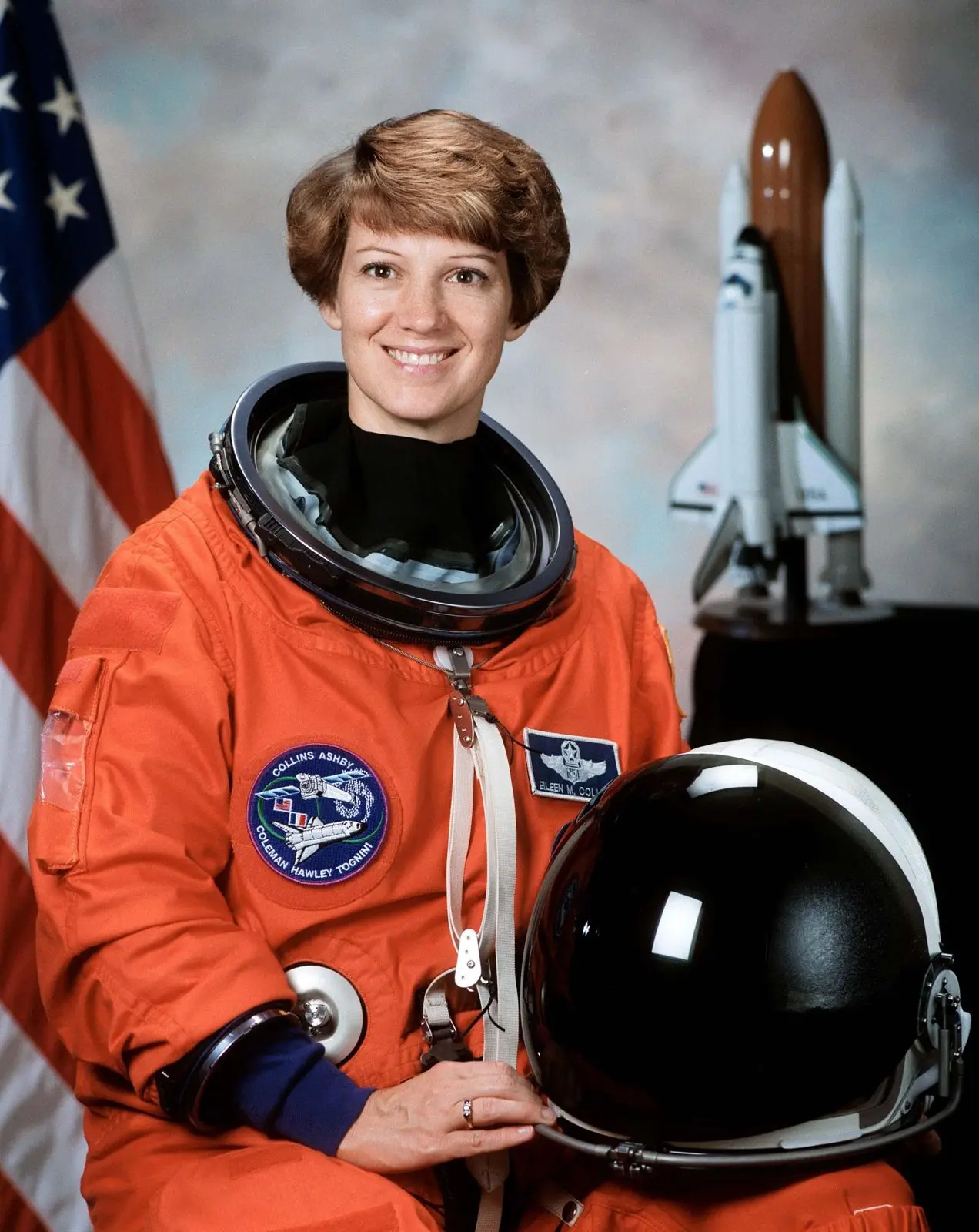
Eileen Collins, an acclaimed astronaut and retired United States Air Force Colonel, has made history as the first female commander of a Space Shuttle. Her significant contributions to aviation and space exploration underscore the advancements women have made in traditionally male-dominated fields. As discussions on gender equity in STEM careers continue, Collins’ story remains an inspiring example for aspiring scientists and engineers.
Early Life and Education
Born on November 19, 1956, in Elmira, New York, Collins developed a passion for flying at a young age. After earning a Bachelor’s degree in Mathematics and a Master’s degree in Operations Research from Syracuse University, she joined the United States Air Force. There, Collins became a qualified test pilot and logged over 3,000 flight hours in various types of aircraft, proving her mettle in the skies.
NASA Career Highlights
Collins joined NASA in 1990 and quickly established herself as a force within the agency. As a pilot for the Space Shuttle Columbia on the STS-63 mission in 1995, she made history as the first woman to pilot a spacecraft. Her career reached a pivotal moment in July 1999 when she commanded the STS-93 mission, making her the first woman to hold such a position. This mission successfully deployed the Chandra X-ray Observatory, a significant advancement in astrophysics.
Legacy and Impact
Collins’ immense contributions have paved the way for future generations of female astronauts. With her trajectory as a role model, she has participated in various initiatives aimed at encouraging young women to enter fields in science, technology, engineering, and mathematics (STEM). Collins has spoken at numerous events, sharing her experiences and advocating for equal opportunities in aviation and space exploration.
Conclusion
Eileen Collins remains a symbol of courage and achievement, inspiring many with her groundbreaking journey in a field historically dominated by men. As global interest in space exploration grows, Collins’ remarkable career serves as a reminder of the importance of diversity and representation in pursuing innovation and discovery. Her influence will likely continue to be felt in the realm of space travel, helping foster an inclusive environment for future explorers.
