Introduction
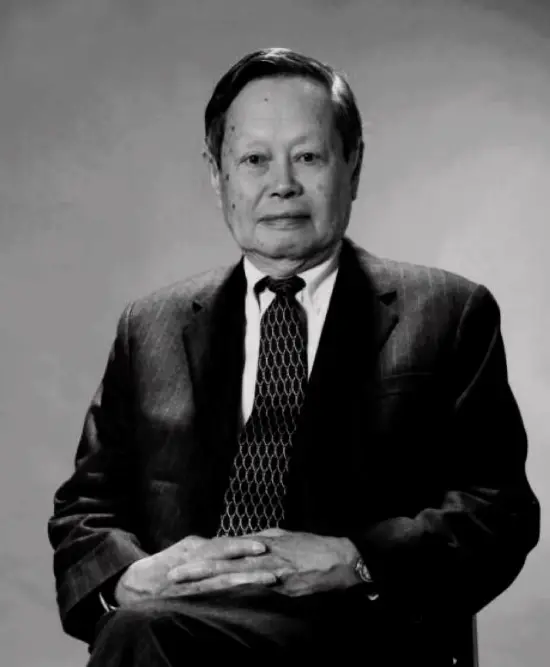
Yang Zhenning, one of the most influential physicists of the 20th century, has made significant contributions to theoretical physics, particularly in the areas of particle physics and statistical mechanics. His work not only advanced scientific understanding but also established important cross-cultural bridges between Eastern and Western academia. As the world acknowledges his contributions, understanding Yang’s journey and achievements is vital for both students and enthusiasts of science.
Career Highlights
Born on October 1, 1922, in Hefei, China, Yang Zhenning demonstrated an early aptitude for science. He completed his undergraduate studies at National Central University in China before moving to the United States to pursue advanced studies at the University of Chicago. In 1957, Yang shared the Nobel Prize in Physics with Tsung-Dao Lee for their groundbreaking work on the laws of parity violation in weak interactions, which revolutionized the field of particle physics.
Yang’s contributions extended beyond the Nobel-winning work. He introduced innovative ideas that have shaped the understanding of quantum mechanics, and his development of the Yang-Mills theory laid the foundation for modern gauge theory in particle physics, which is crucial for formulating the standard model of particle physics.
Recent Events and Recognition
As of 2023, Yang Zhenning continues to be actively involved in scientific discussions and educational initiatives. Notably, he participated in several international conferences, sharing his insights on the future of physics with young researchers. His commitment to education has inspired generations of physicists in China and around the world.
In recent years, the academic community has also sought to honour his legacy through various awards and institutions named in his honour. Yang’s contributions have not only been recognised within the engineering physics communities in China but have also transcended borders, further emphasizing the importance of collaborative research in modern science.
Conclusion
Yang Zhenning’s profound impact on the field of physics is undeniable. As a pioneer through his revolutionary theories and a significant figure in bridging Eastern and Western science, his legacy will continue to influence future generations. The importance of his work lies not only in its scientific breakthrough but also in how it encourages international collaboration and fosters a shared pursuit of knowledge in the scientific community. For readers looking to understand the trajectory of modern physics, Yang’s life and work are essential studies.
