Introduction
The term ‘Intifada,’ meaning ‘shaking off’ in Arabic, refers to two significant uprisings by the Palestinian people against Israeli occupation. Understanding the Intifada is crucial for grasping the complexities of the Israeli-Palestinian conflict, its historical roots, and its ongoing impact on regional dynamics.
The First Intifada (1987-1993)
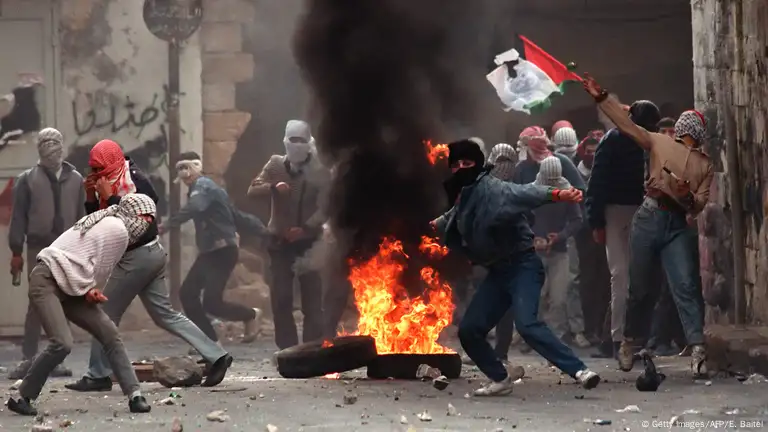
The First Intifada erupted in December 1987, rooted in decades of discontent stemming from the Israeli occupation of the West Bank and Gaza Strip following the 1967 Six-Day War. This grassroots movement saw mass protests, civil disobedience, and a widespread expression of Palestinian nationalism among everyday citizens. The uprising gained significant international attention, influencing public opinion and leading to the Madrid Conference of 1991, which aimed to advance peace negotiations.
During the First Intifada, Palestinian youth, often referred to as ‘the stone-throwers’ for their use of stones against Israeli forces, brought the reality of occupation to the forefront of global consciousness. In response, the Israeli government employed various means of suppression, leading to numerous casualties and human rights violations, as documented by international organisations.
The Second Intifada (2000-2005)
The Second Intifada, or Al-Aqsa Intifada, began in September 2000, triggered by a controversial visit by then-opposition leader Ariel Sharon to the Al-Aqsa Mosque compound in Jerusalem. The second wave of unrest was marked by a significant escalation in violence, including suicide bombings, military incursions, and intensified Israeli military operations in Palestinian territories.
This period was characterised by widespread despair and a decline in the peace process, as many in the Palestinian community felt that previous negotiations had failed to yield meaningful results. Increased casualties on both sides drew worldwide condemnation and highlighted the urgent need for a negotiated resolution.
Current Relevance and Impact
Today, the legacy of the Intifada continues to shape the Palestinian struggle for self-determination. The uprisings have had lasting effects on the political landscape in the region, influencing Palestinian leadership and the international community’s approach to peace discussions.
The recent surge in violence in Israel and the Palestinian territories, coupled with stalled peace negotiations, has prompted renewed calls for dialogue and understanding. The significance of the Intifada serves as a reminder of the urgency of addressing historical grievances and the pursuit of a just solution for both parties.
Conclusion
In summary, the Intifada represents a pivotal chapter in Palestinian history, symbolising resistance against occupation. As discussions surrounding the Israeli-Palestinian conflict continue to evolve, understanding the lessons from the Intifada remains essential for fostering a peaceful resolution and ensuring the rights of all individuals in the region are respected.
