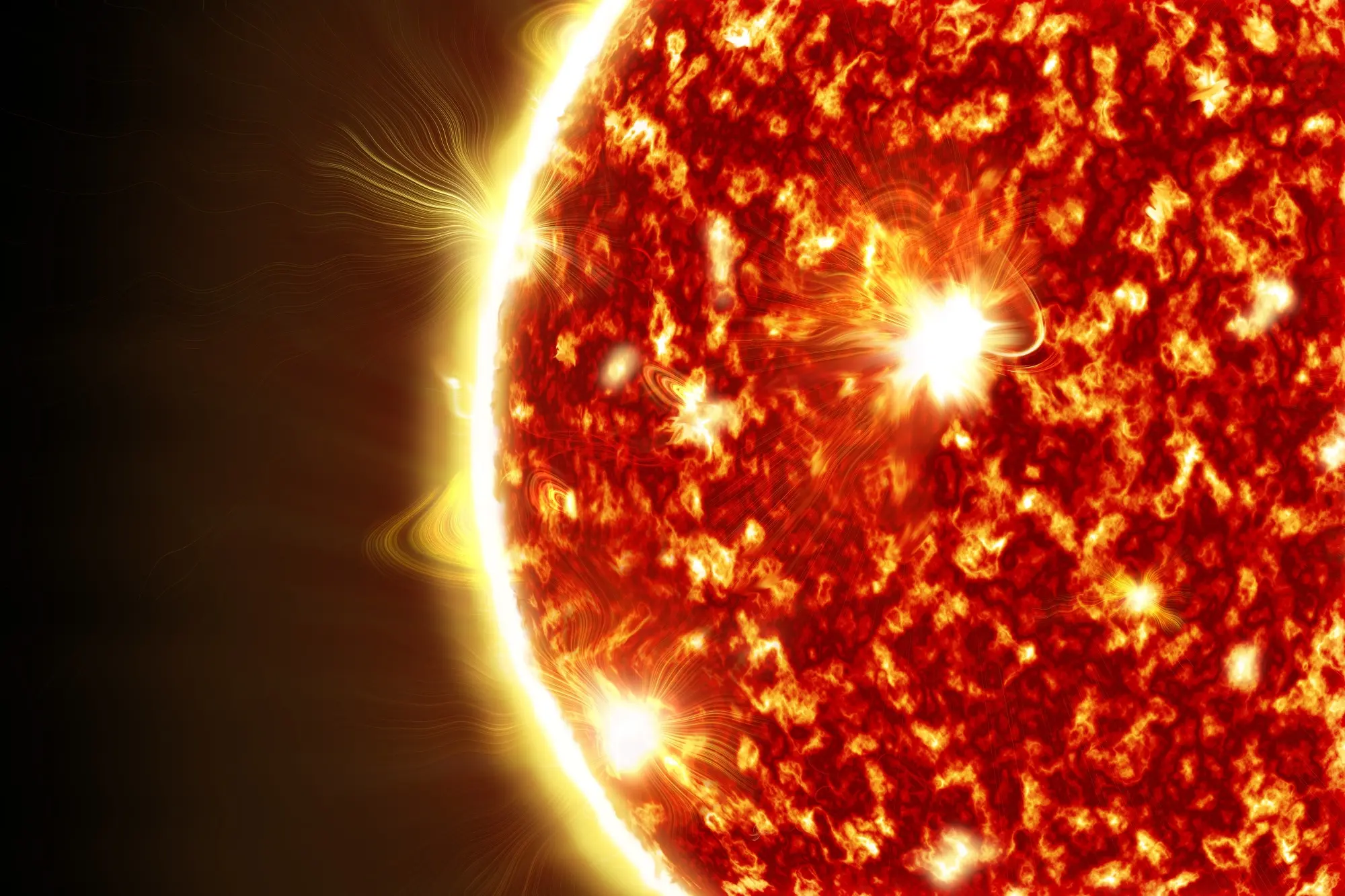
Introduction to Sun Solar Flares
Sun solar flares are powerful bursts of radiation that occur on the sun’s surface, representing significant events in solar activity. Understanding these phenomena is vital due to their potential effects on Earth, including disruption of communication systems, navigational tools, and even power grids. With recent advancements in space observation technology, scientists are increasingly able to predict and study solar flares, enhancing preparedness for their consequences.
What Are Solar Flares?
Solar flares are sudden flashes of brightness observed near the sun’s surface or in its atmosphere, typically occurring in areas with strong magnetic activity, such as sunspots. A solar flare releases energy equivalent to millions of hydrogen bombs exploding simultaneously. They can last from a few minutes to several hours and are classified into categories (A, B, C, M, and X) based on their intensity.
The Recent Surge in Solar Activity
In recent months, there has been a notable increase in solar activity as the sun approaches the peak of its 11-year solar cycle, known as Solar Cycle 25. Studies indicated a rise in reported solar flares, particularly the intense M-class and X-class bursts. In early September 2023, two significant solar flares were recorded, prompting alerts from agencies such as NASA and the National Oceanic and Atmospheric Administration (NOAA).
Implications for Earth
The effects of solar flares on Earth can be profound. When a solar flare occurs, it releases a stream of electromagnetic energy, which can interfere with radio signals and GPS systems, leading to temporary blackouts. Additionally, the Charged Particles released can lead to increased auroras and pose risks to astronauts and spacecraft. The recent flares prompted precautionary measures for satellite operators to protect their technology against radiation exposure.
Future Predictions and Research
With solar activity expected to peak in 2025, scientists predict more frequent and intense solar flares in the coming months. Continuous monitoring and research are essential in understanding and mitigating the effects of these solar events. Agencies worldwide are investing in advanced solar observatories that will enhance forecasting capabilities, allowing for timely warnings for those who rely on satellite systems and technology.
Conclusion
In summary, solar flares are important celestial events that can have tangible impacts on Earth’s technology and infrastructure. As science progresses in understanding solar dynamics, the implications of solar flares remain crucial for safeguarding communications, space exploration, and advancing our knowledge of the sun’s behaviour. Awareness and preparedness will be key as we move further into the peak of Solar Cycle 25.
