Introduction
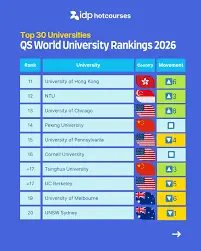
As the landscape of higher education continues to evolve, university rankings remain a critical touchstone for students, educators, and policymakers alike. With the upcoming release of the University Rankings for 2026, understanding the metrics influencing these rankings is more important than ever. These rankings not only guide prospective students in their choices but also reflect the global competitiveness of institutions, showcasing strengths in research, teaching, and student satisfaction.
Key Factors Influencing University Rankings in 2026
The methodology behind university rankings often varies across different publications. However, several core metrics are typically used. According to the latest data from established ranking organizations, factors such as academic reputation, employer reputation, faculty-to-student ratio, research output, and international student ratio play a significant role in determining a university’s standing.
As we approach 2026, there is a growing emphasis on the impact of digital transformation and sustainability initiatives. Universities that demonstrate leadership in integrating technology into education and prioritise sustainability in their operations are likely to see positive reflections in their rankings.
Data from the latest surveys suggest a notable shift towards valuing student experience and outcomes more heavily. Metrics that assess student engagement, mental health support, and employability after graduation are increasingly becoming benchmarks for success.
Recent Trends in Global University Rankings
Looking back at the 2024 and 2025 rankings, we have seen a continued rise of institutions in Asia and Europe, reflecting a global shift in education; for instance, several universities from China and the UK have made remarkable improvements. As noted by the QS World University Rankings, the University of Oxford retained its position as a top contender, but institutions from Shanghai and Zurich also climbed the ranks significantly. This trend indicates that future rankings may see more diversification.
Looking Ahead: Predictions for 2026 Rankings
Experts predict that the competitive landscape of university rankings will intensify in 2026. Institutions that can demonstrate tangible benefits of their educational methodologies and a commitment to social responsibility are expected to perform better. Moreover, institutions that adapt swiftly to the evolving dynamics of global education—such as partnerships with industry and investment in research—are anticipated to rise in the ranks.
Conclusion
The upcoming university rankings for 2026 will not just reflect the status of academic institutions but will also serve as crucial indicators of where the future of education is headed. As students increasingly seek out institutions that not only educate but also prepare them for the future job market, universities must evolve accordingly. Understanding and adapting to these shifts will be critical for institutions striving for greater recognition in the educational community.
