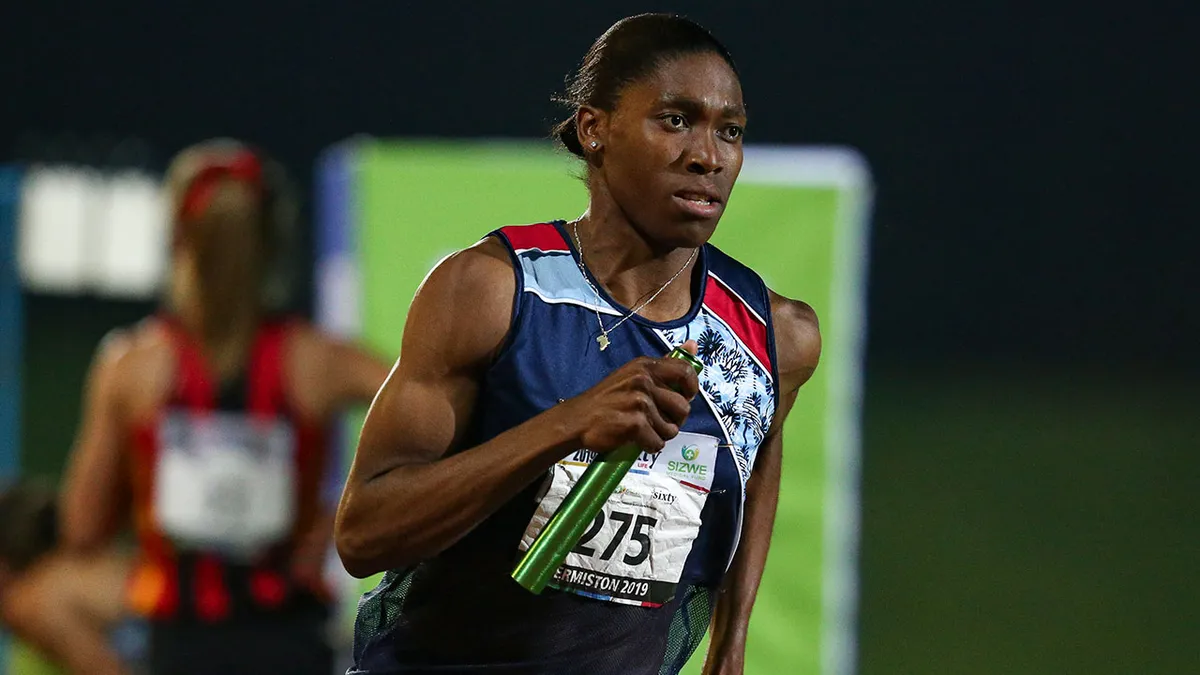
Caster Semenya, a two-time Olympic champion runner, has publicly criticized the International Olympic Committee (IOC) for its recent decision to ban transgender women athletes from competing in women’s events. This announcement, made on March 29, 2026, has sparked significant debate within the sports community.
The IOC’s new eligibility policy, which will take effect at the Los Angeles Olympics in July 2028, has raised concerns among many, including Semenya. She has been barred from participating in her favorite race since 2019 due to her testosterone levels being higher than the typical female range.
Semenya’s criticism comes in the wake of her ongoing legal battles regarding sex eligibility rules. She previously won a judgment from the European Court of Human Rights in her challenge against these regulations. Despite this victory, she has now ended her seven-year legal struggle, expressing her disappointment with IOC President Kirsty Coventry.
“Personally, for her as a leader, she’s an African, I’m sure she understands how, you know, we as Africans, we are coming from, as a global South, you know, you cannot control genetics,” Semenya stated, emphasizing the need for a more nuanced understanding of the issue.
Moreover, Semenya questioned the scientific basis of the IOC’s decision, stating, “Obviously if you say the science, because we talk about science here, if the science is clear, show us who decided and don’t dress that as a lie because it’s a lie and we know because we’ve seen it so if we were to answer or confront Kirsty that’s how we gonna respond and we’ll respond strong as we are because it affects women.”
Her remarks reflect a broader concern that the IOC’s consultation process was merely a “tick box” exercise, lacking genuine engagement with the affected athletes. Semenya’s frustration highlights the complexities surrounding gender and sports, particularly for athletes who do not fit neatly into traditional categories.
As the sports world prepares for the upcoming Olympics, Semenya’s voice adds to the ongoing discourse about inclusivity and fairness in athletics. The implications of the IOC’s ruling could resonate far beyond the immediate future, influencing policies and discussions around gender in sports.
While Semenya’s legal battles may have concluded, her advocacy for women in sports continues. The reactions to the IOC’s decision are likely to evolve as more voices join the conversation, emphasizing the need for equitable treatment of all athletes.
Details remain unconfirmed regarding how the IOC will implement these new policies and the potential impact on future competitions.
